Noor Trends News, Technical Analysis, Educational Tools and Recommendations

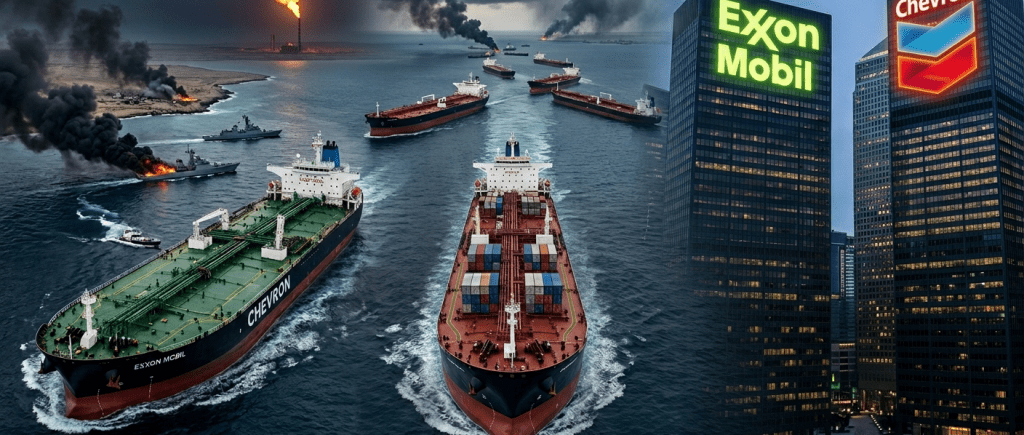
Despite soaring oil prices triggered by the ongoing war in Iran, American energy giants Exxon Mobil and Chevron both saw their profits plummet in the first quarter of the year. The expected windfall from expensive crude was wiped out by unprecedented disruptions to oil shipments, proving that high prices don’t always translate to immediate gains for oil majors.
Geopolitics Trumps Market Pricing for Exxon Mobil and Chevron
While oil prices spiked after the outbreak of conflict in February, the geopolitical reality of transporting that oil has significantly complicated the financial picture for both companies. Exxon Mobil reported a dramatic 45% drop in net income compared to the same period last year. Chevron fared slightly better but still saw a sharp 36% decline in its earnings. The primary culprits were the logistics and market maneuvers necessitated by the war, which canceled out any financial upside from the high cost of crude.
A Stranglehold on Vital Shipping Routes
The most significant immediate challenge facing both corporations is the severe supply disruption caused by the conflict. Exxon Mobil warned that if the critical Strait of Hormuz—a vital passage for global oil tankers—remains closed, it could severely cripple its production. Executives estimated that up to 15% of Exxon Mobil’s overall production is directly impacted by the war.
Furthermore, getting operations back to normal won’t be quick. For Exxon Mobil, even after shipping routes reopen, it will take months to bring oil flows back to pre-war levels. The delay isn’t just operational; shipments from the Persian Gulf typically take a month to reach global customers, a timeline now extended and endangered by the conflict.
Exxon Mobil and Chevron: The Cost of Keeping Markets Supplied
The convoluted profit numbers are largely a result of strategic moves by both companies to manage the crisis. In response to the disruption, Exxon Mobil, for instance, rerouted 13 million barrels of oil to critical markets. However, these urgent actions had a major accounting downside for the first-quarter results.
Exxon Mobil utilizes financial “hedges” to lock in the profit from those shipments. These hedges ensure that when the oil eventually reaches its destination, the company will secure its profit. But because the oil was still on the way and had not been delivered to the customer, the revenue could not be officially counted in the first quarter, while the hedges were. This created a “timing effect”—a temporary book loss. For Exxon Mobil, this resulted in a startling temporary deficit.
This $4 billion accounting loss, described by leadership as deferred profit, will be balanced out in subsequent quarters when the oil arrives. Chevron faced similar accounting challenges. Even though they are slightly less vulnerable given a larger portfolio outside the region, they still had a massive accounting charge. Essentially, while the companies performed well in a crisis, standard quarterly reporting methods failed to capture the full, complex picture.