Noor Trends News, Technical Analysis, Educational Tools and Recommendations

Gold Plunges More Than 3% as Strong US Jobs Report Crushes Rate-Cut Hopes
Gold prices suffered a sharp selloff on Friday after a surprisingly strong US employment report reinforced expectations that interest rates could remain elevated for longer, boosting the US dollar and weighing heavily on precious metals.
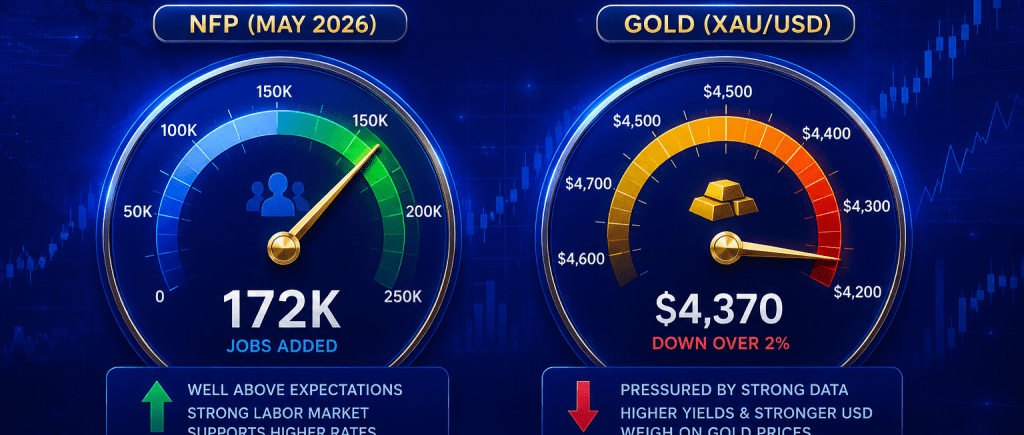
Spot gold fell to approximately $4,339.92 per ounce, marking a decline of more than 3% on the day and extending losses across multiple timeframes. The metal is now down 3.5% over the past week and nearly 4.7% over the last month, highlighting the growing pressure facing bullion markets.
The move followed the release of stronger-than-expected US labor-market data, which showed that employers added 172,000 jobs during May. The report indicated that the American economy remains resilient despite concerns about elevated energy prices, geopolitical tensions, and slowing global growth.
Financial markets responded immediately. The US dollar strengthened against major currencies, while Treasury yields moved higher as investors reassessed the likelihood of near-term interest-rate reductions. The stronger economic backdrop has encouraged markets to believe that policymakers may keep borrowing costs elevated for longer than previously anticipated.
For gold, the shift is significant. The precious metal tends to perform best when interest rates are falling or expected to decline. Higher rates increase the attractiveness of yield-bearing assets such as bonds while simultaneously strengthening the dollar, creating a double headwind for gold prices.
The latest decline has pushed bullion toward some of its lowest levels in months, despite ongoing geopolitical uncertainty in several regions. Traditionally, gold benefits from periods of political instability and market anxiety, but recent months have demonstrated that monetary policy expectations can outweigh safe-haven demand when investors focus on inflation and interest-rate risks.
Market sentiment has also been influenced by persistent concerns surrounding energy prices. Elevated oil costs continue to fuel inflation fears, leading investors to question whether central banks will have enough room to ease policy in the coming quarters. As a result, traders have gradually reduced expectations for aggressive rate cuts this year.
The pressure on gold is reflected across broader performance metrics. Despite remaining nearly 29% higher than a year ago and more than 129% above levels seen five years ago, recent momentum has clearly shifted in favor of sellers. Friday’s decline erased a significant portion of the gains accumulated earlier in the year and left the market searching for fresh catalysts.
Trading activity remained elevated throughout the session, with volume approaching 671,000 ticks as investors reacted to the employment data and adjusted positions across currency, bond, and commodity markets.
Looking ahead, traders will closely monitor upcoming inflation reports, central-bank communications, and developments in global energy markets. These factors are likely to determine whether gold can stabilize after its recent selloff or whether further downside pressure emerges in the weeks ahead.
For now, the message from financial markets is clear: a stronger US economy, a firmer dollar, and rising bond yields have combined to create one of the most challenging environments for gold seen in recent months.