Noor Trends News, Technical Analysis, Educational Tools and Recommendations

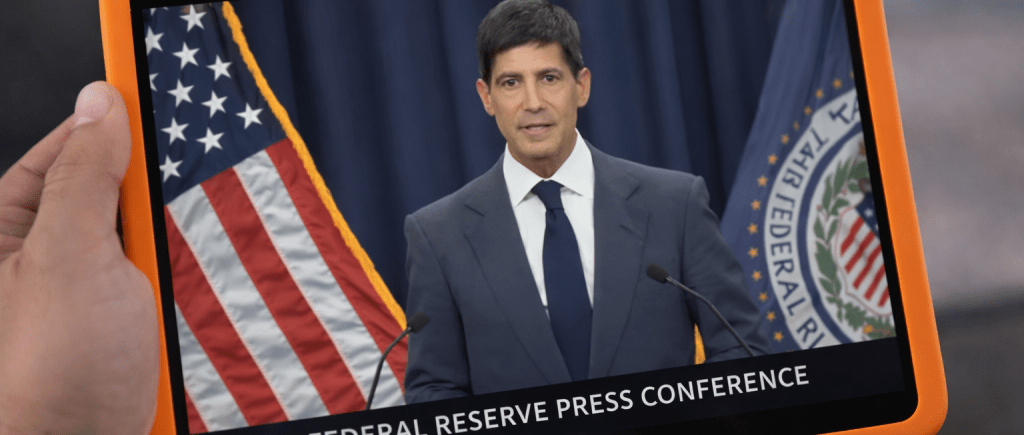
Kevin Warsh’s first appearance as Chair of the Federal Reserve delivered a clear message: the era of easy money is not returning anytime soon. In his debut press conference, Warsh confirmed that interest rates would remain in the 3.5–3.75 percent range, emphasizing that inflation remains the central challenge for the U.S. economy. His tone was measured but unmistakably firm, signaling continuity with the Fed’s restrictive stance rather than a pivot toward easing.
Independence and Inflation
Warsh underscored the Fed’s independence, asserting that policy decisions will be guided solely by economic data rather than political pressure. The statement came amid renewed calls from the White House for rate cuts to stimulate growth. Warsh’s response was diplomatic yet decisive: the central bank will act “as conditions warrant,” not as politics demand.
He acknowledged that inflation, driven partly by elevated energy prices and supply‑chain disruptions, remains above the 2 percent target. While progress has been made, he warned that premature easing could reignite price pressures. This stance reinforced expectations that the Fed will maintain its higher‑for‑longer approach through the summer.
A Shift in Communication
In a notable departure from previous chairs, Warsh revealed that he did not submit his own forecast to the Fed’s quarterly projections. He argued that excessive forward guidance can distort market behavior, preferring a more restrained communication style that lets data speak for itself. The move suggests a shift toward data‑driven discretion, reducing the Fed’s verbal footprint and increasing market uncertainty about timing of future rate changes.
Market Reaction and Broader Implications
Financial markets responded swiftly. The U.S. Dollar Index climbed to the 100‑point mark, reflecting investor confidence in a prolonged period of tight monetary policy. Gold prices fell below $4,300 per ounce, as traders adjusted to the prospect of sustained high yields and a stronger dollar. Bond yields edged higher, while equity markets turned cautious, digesting the implications of Warsh’s hawkish tone.
Outlook
Warsh’s debut reinforced the Fed’s credibility and signaled a disciplined approach to inflation management. His emphasis on independence and reduced forward guidance marks a philosophical shift that could redefine how the central bank communicates with markets. For investors, the message was clear: the Fed remains vigilant, the dollar remains dominant, and the path to lower rates will be slower than many hoped.