Noor Trends News, Technical Analysis, Educational Tools and Recommendations

A widening economic shock is rippling across Asia and Europe as escalating tensions tied to the conflict involving Donald Trump and Benjamin Netanyahu in Iran begin to reshape global markets. What started as a regional confrontation has quickly evolved into a broader financial strain, with rising prices and supply disruptions echoing conditions last seen during the Russian invasion of Ukraine.
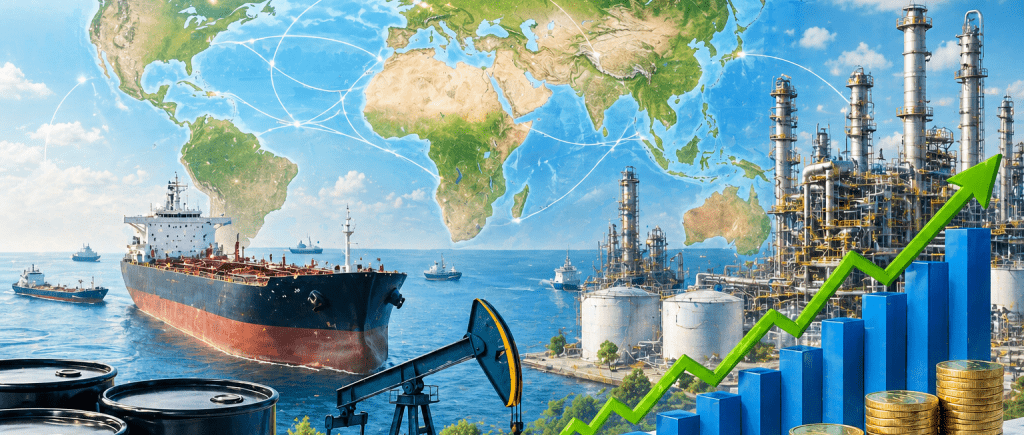
At the heart of the disruption is the strategic Strait of Hormuz, where constraints on shipping have tightened global energy supply. While the immediate impact is concentrated around key export routes, the consequences are being felt far beyond, as economies across Asia and Europe face higher import costs, inflationary pressure, and increased market volatility.
Governments and central banks are now under pressure to contain the fallout. The strain is particularly visible in energy-dependent economies, where rising fuel costs are feeding into broader price increases and slowing growth expectations. In response, policymakers are exploring emergency measures to stabilize currencies, secure liquidity, and prevent financial markets from overreacting to short-term disruptions.
The United States is emerging as a central player in efforts to limit financial instability. Mechanisms such as currency swap arrangements are being discussed as a way to maintain access to dollar liquidity, reduce pressure on exchange rates, and avoid disorderly asset sales that could unsettle global markets. These tools are designed not as bailouts, but as preventative buffers against escalating financial stress.
The economic outlook is deteriorating. The International Monetary Fund has warned that the combined effects of supply disruptions and weakened confidence could push several economies toward stagnation or contraction. Growth forecasts are being revised downward, reflecting both the immediate energy shock and the longer-term uncertainty surrounding geopolitical risk.
Beyond the short term, the crisis may leave a lasting imprint on global investment patterns. Heightened geopolitical tensions tend to raise borrowing costs and reduce capital flows, particularly in regions perceived as vulnerable to external shocks. For Asia and Europe, this could mean slower investment, tighter financial conditions, and more cautious economic planning in the years ahead.
Even if disruptions ease, the effects are unlikely to fade quickly. The current moment represents more than a temporary spike in volatility—it signals a structural shift in how geopolitical risk is priced into the global economy. For Asia and Europe alike, the challenge now is not only to absorb the shock, but to adapt to a more uncertain and fragile economic landscape.