Noor Trends News, Technical Analysis, Educational Tools and Recommendations

Micron delivered a significantly stronger-than-expected earnings report, reflecting continued strength in demand for advanced memory products tied to artificial intelligence infrastructure. The results showed clear upside versus market expectations, supported by robust pricing and sustained demand from data center customers.
Forward guidance also pointed to continued momentum, with management signaling further growth in the next quarter, driven largely by ongoing AI-related demand rather than a traditional cyclical rebound.
AI Infrastructure Led by NVIDIA Is the Key Demand Engine
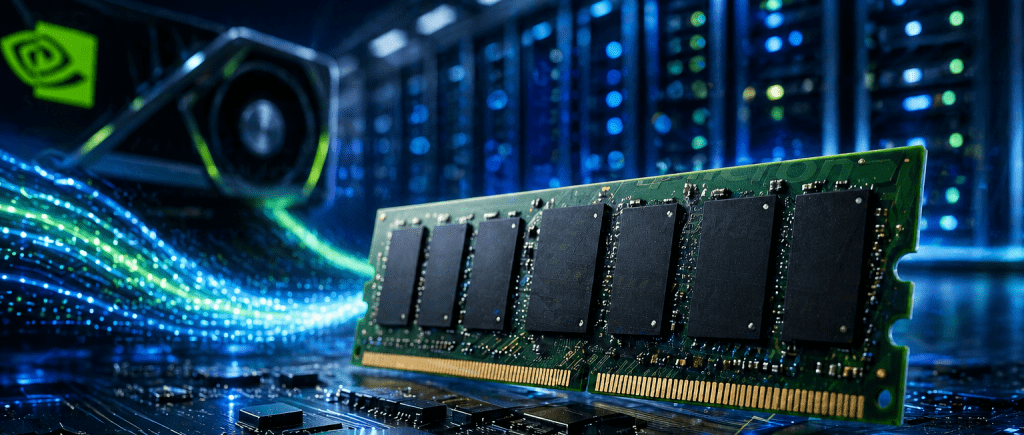
A central driver behind Micron’s performance is the rapid expansion of AI computing infrastructure, heavily influenced by NVIDIA.
NVIDIA’s GPUs and AI platforms have triggered a surge in demand for high-performance memory, particularly high-bandwidth memory (HBM), which is essential for training and running large AI models. This has shifted Micron’s product mix toward more advanced and higher-value memory solutions.
The result is a structural change in demand patterns, with AI workloads becoming the dominant growth engine for memory consumption in data centers.
High-Bandwidth Memory Becomes a Strategic Product
High-bandwidth memory has emerged as the most critical segment in Micron’s portfolio. Unlike traditional memory products, HBM is specifically designed to handle the extreme data throughput required by AI accelerators.
This shift has improved pricing dynamics and strengthened customer commitments, as AI chipmakers and cloud providers secure long-term supply to support expanding AI infrastructure.
From Cyclical to Structural Demand
Historically, the memory chip industry has been highly cyclical, alternating between oversupply and shortages. However, AI infrastructure demand is changing that pattern. Instead of short-term purchasing cycles, large cloud providers and AI companies are increasingly locking in multi-year supply arrangements. This reduces volatility and provides more predictable demand visibility for manufacturers.
While cyclicality has not disappeared entirely, the current phase is increasingly being shaped by long-term structural trends rather than short-term inventory swings.
Market Reaction and Investor Focus
The market has responded positively, with Micron shares reaching new highs following the earnings release. Investor attention is now focused on whether AI-driven demand can sustain its current pace over multiple years.
At the same time, valuation discussions remain active, as some investors compare current pricing levels to historical semiconductor cycles and question how long the momentum can continue.
Strategic Positioning in a Global Tech Shift
Micron also benefits from its position in a strategically important segment of the semiconductor supply chain at a time when governments are prioritizing domestic chip production and supply chain resilience. This adds an additional layer of structural support, alongside strong demand from AI infrastructure.
The Key Question Ahead
The central debate is no longer whether AI is driving demand—it clearly is—but whether this represents a temporary surge or the beginning of a longer-lasting structural shift in the memory industry.
With NVIDIA-led AI expansion continuing and memory demand remaining tight, Micron is positioned at the center of one of the most important technology transitions in years.