Noor Trends News, Technical Analysis, Educational Tools and Recommendations

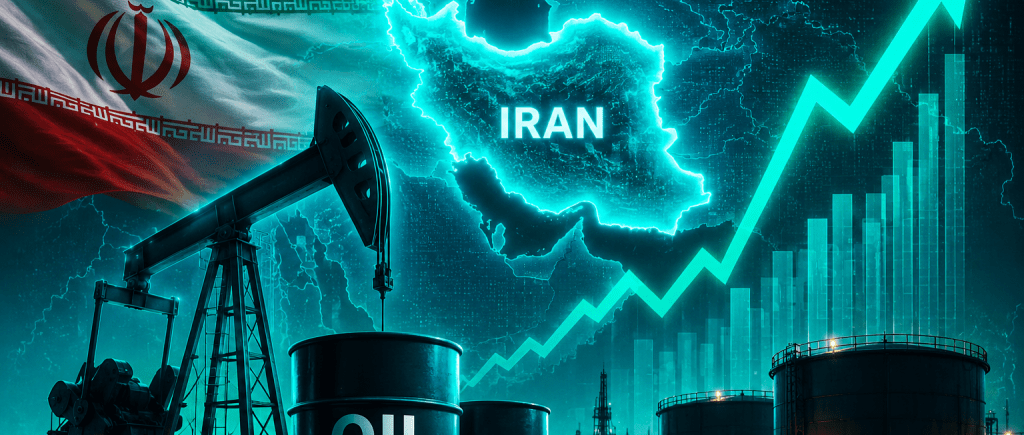
Oil prices climbed sharply after a sudden spike in geopolitical tensions revived fears over global supply disruptions. After weeks of easing pressure, crude reversed course and rallied strongly, moving from the high $80s into the low $90s in a matter of hours.
WTI is currently trading around 92.24 dollars, slightly down on the day by about 0.2 percent. Brent is also holding firm near 95 dollars, showing a strong daily gain of more than 3 percent. On a weekly basis, both benchmarks are higher, while the monthly picture still reflects a market that has rebuilt part of its earlier risk premium after a period of decline.
The move marked a clear shift in sentiment, as traders quickly returned to oil exposure after signs that diplomatic progress had stalled.
Strait of Hormuz Back in Focus
A key driver of the rally was renewed concern over the Strait of Hormuz, one of the world’s most important oil shipping routes.
Threats linked to restricting or closing the passage immediately raised alarms in energy markets. Even though similar warnings have been made before without actual disruption, the possibility alone was enough to push prices higher and revive fear-based buying.
Conflicting Signals Add to Market Uncertainty
At the same time, mixed messaging from different political sides added confusion to the outlook. One side suggested talks had been suspended, while the other continued to indicate that negotiations were still ongoing.
This contradiction left traders uncertain about the real status of discussions, leading to fast and volatile price reactions driven mainly by headlines.
Second Shipping Route Mentioned
Attention also returned to the Bab el-Mandeb Strait after suggestions it could be drawn into the broader escalation narrative.
Although no disruption has been confirmed, the mention of multiple key shipping lanes reinforced concerns that global energy flows could come under wider pressure if tensions escalate further.
Market Reaction Driven by Headlines
The oil market reaction has been dominated by news flow rather than long-term fundamentals. Prices are reacting quickly to political statements, with sharp swings higher or lower depending on the latest developments.
This keeps volatility elevated and makes sentiment highly sensitive to any new signals from the region.
Outlook: Sensitive and Fast-Moving Market
For now, oil remains highly reactive to geopolitical developments. Any escalation or easing in tensions can quickly shift prices in either direction.
Until the situation becomes clearer, markets are expected to remain headline-driven, with sentiment swinging between fear and relief rather than forming a stable trend.