Noor Trends News, Technical Analysis, Educational Tools and Recommendations

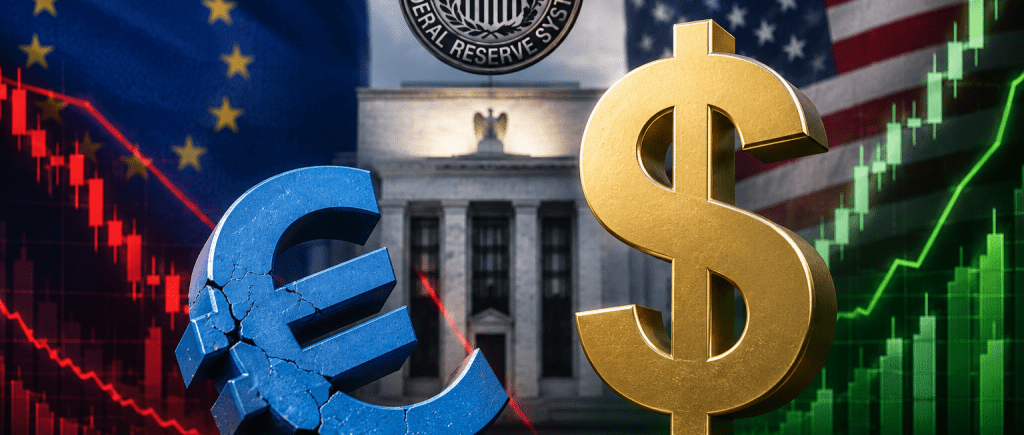
The euro fell to its weakest level in nearly two months on Thursday as the powerful aftershocks of the Federal Reserve’s latest policy meeting continued to ripple through global currency markets. Investors increasingly shifted toward the U.S. dollar after policymakers signaled that interest rates could remain elevated for longer, reinforcing expectations that inflation remains a top priority.
The decline marks a notable turnaround from earlier gains this week, as traders reassessed the outlook for monetary policy and economic growth on both sides of the Atlantic. The prospect of further policy tightening in the United States has strengthened the dollar’s appeal, pushing the euro lower and widening the gap between the world’s two most traded currencies.
Strong U.S. Data Reinforces Dollar Strength
Recent economic indicators have added to the dollar’s momentum by suggesting that the U.S. economy remains remarkably resilient. Labor market data continues to point to solid employment conditions, easing fears of an economic slowdown and giving policymakers room to maintain a firm stance against inflation.
That combination of economic strength and the possibility of higher borrowing costs has attracted investors seeking stronger returns, helping the greenback extend its gains against most major currencies.
Even as geopolitical tensions have eased somewhat in recent days, currency traders remain focused on monetary policy expectations, which continue to favor the dollar.
Europe Struggles Under Weak Growth Outlook
While the United States benefits from a resilient economy, Europe continues to face mounting growth concerns. Forecasts for the region’s largest economies remain subdued, with economic expansion expected to stay sluggish amid ongoing challenges affecting business activity and consumer confidence.
The weaker growth outlook has become a significant headwind for the euro, outweighing concerns about inflation and reducing investor appetite for the single currency. As a result, markets remain skeptical that Europe can generate the momentum needed to support a sustained recovery in the euro.
Dollar Dominance Reshapes Currency Markets
The latest moves highlight a growing divergence between the economic outlooks of the United States and Europe. Investors increasingly view the U.S. as better positioned to withstand higher interest rates, while Europe faces a more difficult balancing act between supporting growth and controlling inflation.
This shift in sentiment has fueled broad demand for the dollar and intensified pressure on the euro, which now trades near its lowest levels in weeks.
What Comes Next for the Euro?
Attention now turns to upcoming economic reports and central bank signals that could shape the next phase of currency market movements. Stronger U.S. data or additional signs of persistent inflation could reinforce expectations for tighter monetary policy, providing further support for the dollar.
Meanwhile, the euro’s path forward will likely depend on whether Europe can demonstrate stronger economic momentum and restore confidence in the region’s growth prospects.
For now, the story dominating currency markets is clear: the Federal Reserve’s influence remains the driving force behind the dollar’s rise, leaving the euro struggling under the weight of the powerful Fed effect.