Noor Trends News, Technical Analysis, Educational Tools and Recommendations

Key Takeaways
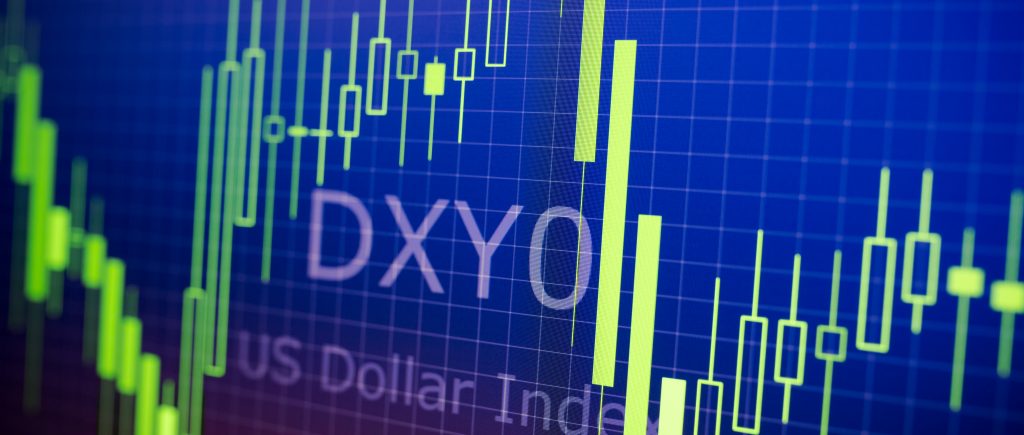
- Dollar stabilizes: The DXY was little changed in London trade after hitting a 10-day low Monday; EUR/USD edged up 0.2%.
- Iran euphoria fading: Currency traders are beginning to fade the initial peace deal excitement as concrete details on sanctions and Hormuz remain scarce.
- Hawkish backdrop protects dollar: The risk of a hawkish skew in the Fed’s dot plot projections is keeping dollar short-sellers at bay.
- Bank of America’s warning: “The USD has been on the back foot after the US-Iran peace deal announcement. However, we remain cautious about chasing the move.”
- BofA sees hawkish Fed surprise more likely: The bank views “US data to continue to outperform the rest of the world, leaving the path of least resistance for the USD to the upside.”
- Fed holds Wednesday: Universally expected to keep rates steady; updated dot plot and Warsh’s press conference are the key watches.
- Sterling in holding pattern: The pound awaits Thursday’s Bank of England decision, which is widely expected to be a dovish hold.
- BOE’s stagflation dilemma: Anemic growth and a constrained budget prevent the BOE from following global peers higher — leaving sterling exposed.
- By-election risk: Thursday’s Makerfield by-election adds political uncertainty to the UK’s currency picture.
- BOJ hikes to 1%: The highest Japanese policy rate in 31 years; markets focused on signals about future tightening pace.
- Yen lingers near 160: USD/JPY was little changed after the BOJ decision despite higher rate expectations.
- MUFG’s caution: The yen will “take its cue on how forcefully” the Deputy Governor communicates the path of rates ahead.
- RBA holds at 4.35%: Australia’s central bank snapped its three-month tightening streak; the Aussie dollar was unchanged.
The U.S. dollar held flat on Tuesday, stabilizing after its sharpest retreat in weeks as foreign exchange markets shifted focus from a nascent Middle East truce to a blockbuster week of central bank decisions.
The U.S. Dollar Index was little changed in London trade, after hitting a 10-day low on Monday, when a preliminary agreement between the United States and Iran helped improve risk appetite and sent oil prices sharply lower. The EUR/USD edged up 0.2%.
Iran Peace Accord Details, Fed, and BOE Meeting Awaited
While President Donald Trump’s announcement of a preliminary U.S.-Iran peace accord initially unleashed a wave of risk-on sentiment and deflated crude prices, currency traders have begun fading the immediate euphoria.
With concrete details on the lifting of sanctions and the reopening of the crucial Strait of Hormuz still scarce, the greenback’s downside is being firmly protected by a hawkish institutional backdrop ahead of Wednesday’s Federal Reserve meeting.
While the Fed is universally expected to keep its benchmark rate steady, the risk of a hawkish skew in the updated dot plot projections is keeping short-sellers at bay.
“The USD has been on the back foot after the US-Iran peace deal announcement. However, we remain cautious about chasing the move,” Bank of America analysts said in a recent note.
“We view a hawkish surprise on this week’s FOMC meeting as more likely than a dovish one, even though we see risks as two-sided. We also expect US data to continue to outperform the rest of the world, leaving the path of least resistance for the USD to the upside in the near term,” the analysts added.
Sterling Trapped Ahead of BOE
The British pound was trapped in a holding pattern ahead of Thursday’s Bank of England decision. While the European Central Bank moved to counter post-war price pressures with a rate hike last week, sterling traders fully expect the Monetary Policy Committee to stand pat.
Hamstrung by anemic growth data and a severely constrained national budget, the BOE lacks the economic air cover to follow its global peers higher. With a parliamentary by-election looming, a dovish hold by the BOE on Thursday could quickly strip the pound of its interest-rate support — leaving it exposed to a stagflationary drag.
BOJ Hikes to 31-Year High; RBA Holds at 4.35%
The Bank of Japan raised its short-term policy rate by 25 basis points to 1.0% — the highest level in 31 years — in a widely anticipated move aimed at containing inflation and continuing its gradual normalization of monetary policy.
Markets were focused less on the hike itself and more on signals regarding the pace of future tightening.
The Japanese yen’s USD/JPY pair was little changed after the decision, with traders remaining cautious as the currency lingered near the psychologically important 160-per-dollar level despite expectations of higher Japanese rates.
“The perception and interpretation of the Deputy Governor’s remarks may also matter and the Japanese yen will also take its cue on how forcefully he communicates on the path of rates ahead,” MUFG analysts said in a note.
The risk-sensitive Australian dollar was also unchanged after the Reserve Bank of Australia snapped a three-month tightening streak, keeping its cash rate on hold at 4.35%.