Noor Trends News, Technical Analysis, Educational Tools and Recommendations

Oil Plunges More Than 5% as Hormuz Reopening Sparks Global Market Rally
A Peace Deal Rewrites the Market Narrative
For months, the global economy has been held hostage by one question: what happens if energy supplies from the Middle East remain disrupted?
On Monday, markets finally received an answer.
A breakthrough agreement between the United States and Iran, centered on reopening the Strait of Hormuz and de-escalating regional tensions, triggered a dramatic shift across global financial markets. Investors rushed to price out the geopolitical fears that had fueled a powerful surge in oil prices since the conflict began, sending crude sharply lower while stocks rallied worldwide.
The message from markets was immediate and unmistakable: the worst-case energy scenario may no longer be on the table.
—
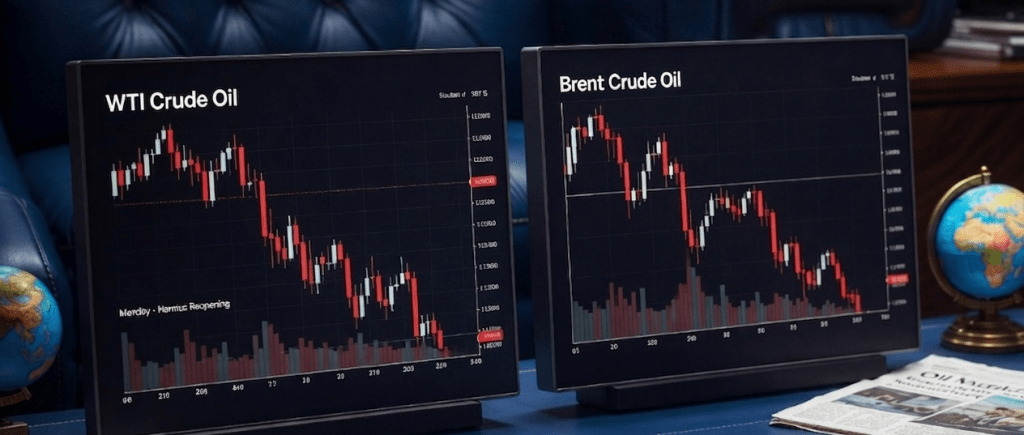
WTI Falls 3.5%, Brent Drops 3.7%
Oil markets delivered their strongest reaction in weeks.
US crude (WTI) fell roughly 3.5%, while international benchmark Brent crude dropped about 3.7%, extending losses after reports that shipping through the Strait of Hormuz could gradually resume.
The decline reflects the fading “war premium” that had been embedded in oil prices during months of uncertainty.
Because nearly a fifth of global oil and liquefied natural gas trade typically passes through the strategic waterway, fears of prolonged disruption had pushed energy costs sharply higher. With a diplomatic framework now in place, traders are reassessing the likelihood of severe supply shortages.
—
The Strait That Moves the World’s Energy
The significance of the Strait of Hormuz goes far beyond regional politics.
The narrow shipping corridor serves as one of the world’s most important energy arteries, linking major Gulf producers to international markets. Any threat to traffic through the strait can send shockwaves across oil, gas, transportation, manufacturing and consumer markets worldwide.
Its potential reopening is therefore being viewed as more than a diplomatic development—it is an economic event with global consequences.
Lower shipping risks translate into lower energy costs, reduced inflation pressure and improved visibility for businesses that rely heavily on fuel and transportation.
—
Stocks Celebrate as Risk Appetite Returns
Equity markets responded with enthusiasm.
Investors poured back into risk assets as the prospect of a prolonged energy crisis began to fade. Major stock indexes across Asia, Europe and the United States moved higher, led by sectors that had been hurt most by soaring fuel costs.
Airlines, transportation companies, manufacturers and industrial firms were among the strongest performers as investors anticipated lower operating expenses and improved profit margins.
The rally reflected growing confidence that easing energy pressures could support economic growth while reducing concerns about a renewed inflation surge.
—
Why Falling Oil Matters Beyond Energy Markets
The impact of lower oil prices extends far beyond the energy sector.
When crude prices rise, businesses face higher transportation, production and logistics costs. Those expenses often filter through the economy in the form of higher consumer prices.
A sustained decline in oil therefore has the opposite effect: it eases inflationary pressure, supports household spending and reduces the urgency for central banks to tighten monetary policy.
That prospect has become particularly important as investors prepare for upcoming policy decisions from major central banks.
—
A Turning Point—But Not Yet a Return to Normal
Despite the market’s optimistic reaction, significant challenges remain.
Energy analysts caution that reopening the Strait of Hormuz does not instantly restore normal conditions. Shipping lanes must be secured, logistical bottlenecks addressed and energy flows gradually rebuilt.
Large numbers of vessels remain queued, while energy infrastructure and supply chains will require time to return to full efficiency.
As a result, the economic benefits of the agreement are expected to emerge progressively rather than overnight.
—
The Market’s New Bet
For now, investors appear willing to embrace a more optimistic outlook.
The sharp decline in oil prices, combined with broad gains across global equities, suggests markets are betting that diplomacy may succeed where months of conflict failed.
Whether that confidence proves justified will depend on the details of the final agreement and the pace at which energy exports normalize.
But one thing is already clear: after months of trading on fear, markets have suddenly started trading on hope.