 Noor Trends News, Technical Analysis, Educational Tools and Recommendations

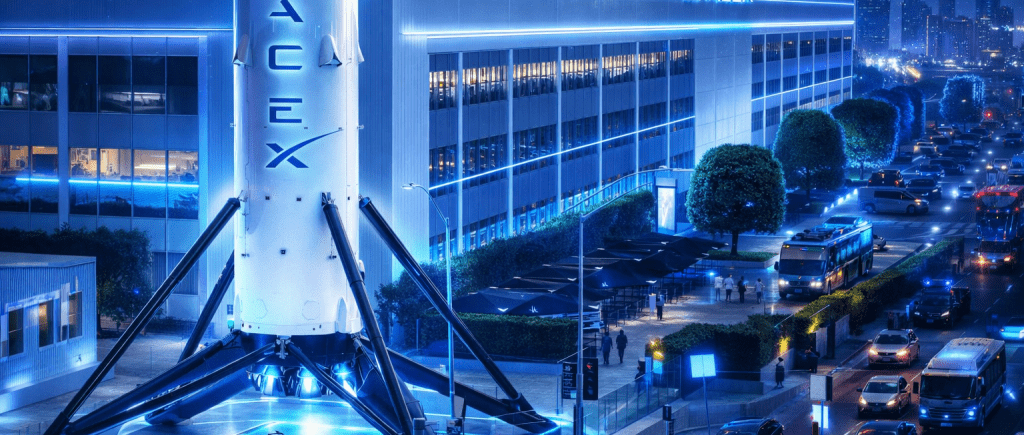
SpaceX has officially unveiled its IPO roadshow presentation as it moves toward one of the most significant public offerings in financial history. The company is targeting approximately $75 billion in fundraising, with a potential valuation nearing $1.8 trillion. Led by Elon Musk, SpaceX is positioning itself far beyond a traditional aerospace company, presenting a unified vision that combines space infrastructure, artificial intelligence, and global communications into a single technological ecosystem.
Unrealistic or Revolutionary? Massive Profit Targets Revealed
Inside its investor materials, SpaceX outlined extremely ambitious long-term financial goals, including a gross margin target of around 70% and a net profit margin of approximately 45%. These projections stand in sharp contrast to the company’s recent financial history, which included substantial net losses in the previous year. The shift highlights an aggressive transformation strategy as SpaceX attempts to evolve from a capital-heavy aerospace operator into a high-margin technology-driven platform.
AI at the Core of SpaceX’s Future Strategy
A central theme in the IPO presentation is the rapidly expanding role of artificial intelligence. SpaceX revealed that AI-related investments have accounted for the largest portion of its capital expenditure over the past two years. This reflects a strategic pivot toward advanced computing infrastructure and integrated systems across its space operations. The approach aligns with broader developments across Musk’s business ecosystem, including initiatives linked to xAI and Tesla’s computing ambitions, signaling a deeper convergence between space technology, AI, and energy systems.
Beyond Rockets: Building the Infrastructure of the Future
SpaceX is also expanding its ambitions beyond rockets and satellites into emerging and largely speculative markets. Its Starlink satellite internet network through Starlink continues to grow globally, while the company is also exploring futuristic concepts such as orbital data centers, space-based computing infrastructure, and even asteroid mining as a long-term economic opportunity. Although many of these initiatives remain in early development stages, they reflect SpaceX’s intent to dominate the next generation of digital and space-based economies.
A $1.8 Trillion Giant in the Making
At an IPO price of $135 per share, SpaceX would raise approximately $75 billion, placing its valuation at around $1.77 trillion. This would immediately rank it among the most valuable companies in the world upon listing. Despite its public debut, the ownership structure is designed to maintain Elon Musk’s overwhelming control, with projections indicating he will retain more than 80% of voting power through a dual-class share system, ensuring long-term strategic dominance.
The Multi-Planetary Vision Behind the IPO
The broader narrative driving the IPO is SpaceX’s long-term mission to enable a multi-planetary future. This includes expanding satellite networks, developing lunar infrastructure, and laying the groundwork for eventual Mars colonization. While these ambitions remain far from realization, the IPO is being framed as a financial gateway to accelerate humanity’s transition toward a space-enabled global economy powered by artificial intelligence and advanced infrastructure systems.
Market Sentiment: Between Hype and Hard Reality
Overall investor sentiment remains divided. Optimism is fueled by technological leadership and Elon Musk’s track record of disruptive innovation, while concerns persist over execution risk, extreme valuation levels, and the significant gap between current financial performance and future profitability targets.