Noor Trends News, Technical Analysis, Educational Tools and Recommendations

The artificial intelligence revolution has powered one of the strongest rallies in modern market history, adding trillions of dollars to the value of major technology companies and fueling investor enthusiasm across the sector.
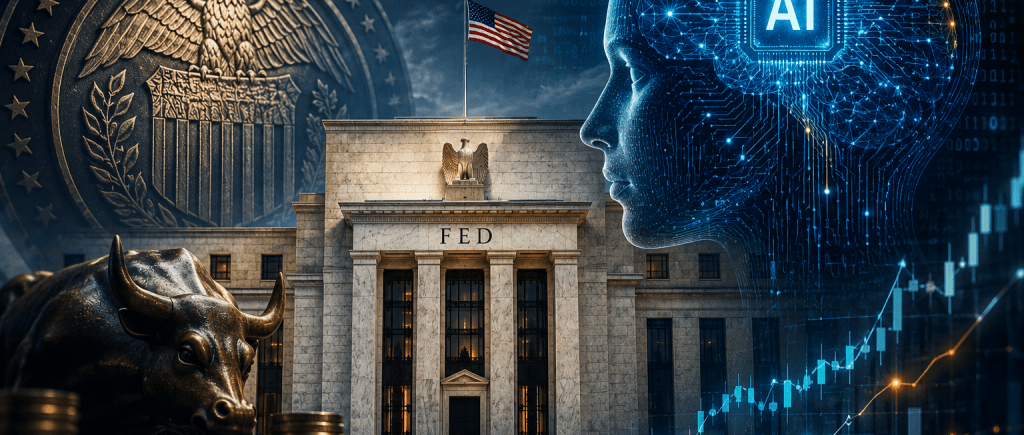
While much of the attention has focused on breakthroughs in chips, software, and data centers, some market observers believe the greatest threat to AI-related stocks may not come from competition or innovation at all. Instead, it could emerge from monetary policy decisions made at the Federal Reserve.
A New Era at the Fed
With Kevin Warsh now leading the Federal Reserve, investors are closely watching the direction of interest-rate policy. Markets had hoped that slowing economic growth would eventually pave the way for lower borrowing costs, helping support high-growth sectors such as technology.
However, Warsh has repeatedly emphasized the importance of maintaining the central bank’s credibility in fighting inflation. If price pressures remain elevated, the Fed could keep interest rates higher for longer or even tighten policy further.
That possibility has raised concerns among investors who have grown accustomed to abundant liquidity and supportive financial conditions.
Why AI Stocks Are Especially Sensitive
Many of the largest AI companies command premium valuations because investors expect strong earnings growth years into the future. When interest rates rise, those future profits become less valuable in today’s terms, making high-growth stocks particularly vulnerable to valuation adjustments.
As a result, even modest increases in interest rates can have an outsized impact on technology shares that are trading at elevated multiples.
The issue is not whether artificial intelligence will continue expanding across industries. Most analysts agree that AI adoption is likely to remain a powerful long-term trend. The question is whether investors will continue paying record prices for companies positioned to benefit from that growth.
Liquidity Has Been a Key Driver
The AI boom has flourished in an environment where capital remained widely available and investors were willing to take on greater risk in pursuit of future returns.
If financial conditions become less accommodating, markets could begin reassessing how much they are willing to pay for future growth, potentially leading to increased volatility across the technology sector.
The Technology Story Remains Intact
Even if interest rates remain elevated, demand for artificial intelligence infrastructure is unlikely to disappear. Companies will still invest in automation, cloud computing, advanced chips, and data-processing capabilities.
What could change is the pace of stock-market gains. A tighter monetary environment may force investors to become more selective and place greater emphasis on profitability rather than long-term growth projections.
A Critical Variable for Markets
For now, the future of the AI trade may depend as much on the Federal Reserve as it does on technological breakthroughs. While innovation continues to drive optimism, interest-rate policy has emerged as a key factor that could determine whether the sector’s remarkable rally continues at its current pace.
In that sense, the next chapter of the AI boom may be shaped not only by engineers and technology executives, but also by decisions made inside the Federal Reserve.