Noor Trends News, Technical Analysis, Educational Tools and Recommendations

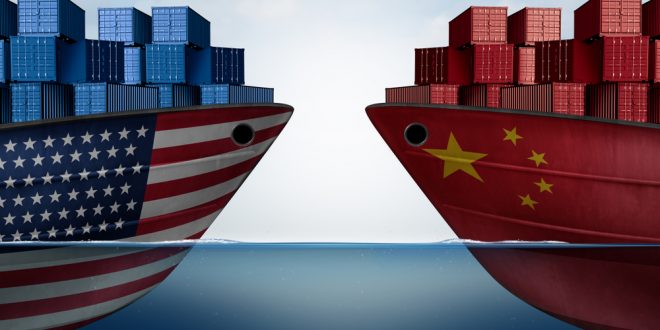
The trade relationship between the United States and China, the world’s two largest economies, remains under heavy strain despite a temporary and fragile truce. While both sides continue negotiations, deep disagreements over tariffs, technology, and industrial policy keep tensions alive and unresolved. The outcome of this rivalry carries major consequences for global markets, supply chains, and economic stability.
From Trade Cooperation to Strategic Competition
For decades, U.S.–China trade expanded rapidly, especially after China’s integration into the global trading system in the early 2000s. This growth delivered lower consumer prices in the United States and massive industrial expansion in China. However, over time, political and economic friction increased as concerns grew in Washington over trade imbalances, industrial subsidies, and market access restrictions.
The dispute intensified when broad tariffs were introduced on Chinese goods, triggering retaliatory measures from Beijing. What began as a trade dispute has since evolved into a broader geopolitical and economic competition.
Tariffs Reshape Global Trade Flows
Tariffs imposed on hundreds of billions of dollars of goods have significantly reshaped trade flows between the two countries. Although there have been temporary pauses and partial reductions, most trade barriers remain in place. As a result, supply chains have shifted toward alternative manufacturing hubs in Asia and Latin America, changing global production patterns.
While trade volumes have declined compared to previous peaks, both economies remain deeply connected, with China still a major supplier of electronics, machinery, and industrial goods to the United States.
Technology Becomes the Core Battleground
Beyond traditional trade, the rivalry has expanded into technology. Semiconductors, artificial intelligence, and advanced computing systems have become central points of tension. Restrictions on high-end chip exports and concerns over digital security have intensified competition between the two sides.
Both countries are now investing heavily in domestic innovation to reduce reliance on foreign technology, particularly in areas linked to national security and military applications.
Critical Minerals and Supply Chain Security
China’s control over key industrial materials, including rare earth elements, has added another layer of complexity to the dispute. These materials are essential for manufacturing electronics, electric vehicles, and advanced defense systems.
In response, the United States has increased efforts to secure alternative sources and strengthen domestic production capacity, while China continues to use its dominance in critical supply chains as a strategic advantage.
Economic Interdependence Still Limits Full Separation
Despite rising tensions, the United States and China remain economically interdependent. Trade in goods and services continues, and both economies rely on each other in key sectors. The complexity of global supply chains makes complete economic separation highly unlikely in the near future.
Many multinational companies still depend on Chinese manufacturing, while China remains a significant market for American exports, particularly in agriculture, energy, and high-value technology products.
Trade Deficits and Economic Debate
The trade imbalance between the two countries remains a political issue, especially in the United States. However, many economists argue that trade deficits alone do not fully reflect economic health and should not be viewed as a measure of success or failure in international trade relations. Instead, the broader impact of globalization includes both benefits, such as lower consumer prices and increased efficiency, and challenges, including job displacement in certain sectors.
A Shift Toward Managed Competition
The relationship between Washington and Beijing is increasingly defined by managed competition rather than cooperation or full decoupling. Both sides continue to protect strategic industries while maintaining limited economic engagement where necessary. Recent diplomatic meetings suggest ongoing efforts to stabilize relations, but major structural disagreements remain unresolved.
Outlook: Prolonged Economic Rivalry Ahead
Looking ahead, the U.S.–China relationship is expected to remain tense but interconnected. While short-term agreements may reduce immediate friction, long-term competition over technology, trade influence, and global economic leadership is likely to continue shaping the international system for years to come.