Noor Trends News, Technical Analysis, Educational Tools and Recommendations

The United Arab Emirates is moving to reshape its energy export strategy with the construction of a new major oil pipeline that bypasses the Strait of Hormuz, one of the world’s most critical and vulnerable shipping chokepoints. The project is designed to significantly increase export capacity and reduce exposure to regional geopolitical risks that have repeatedly threatened global energy flows.
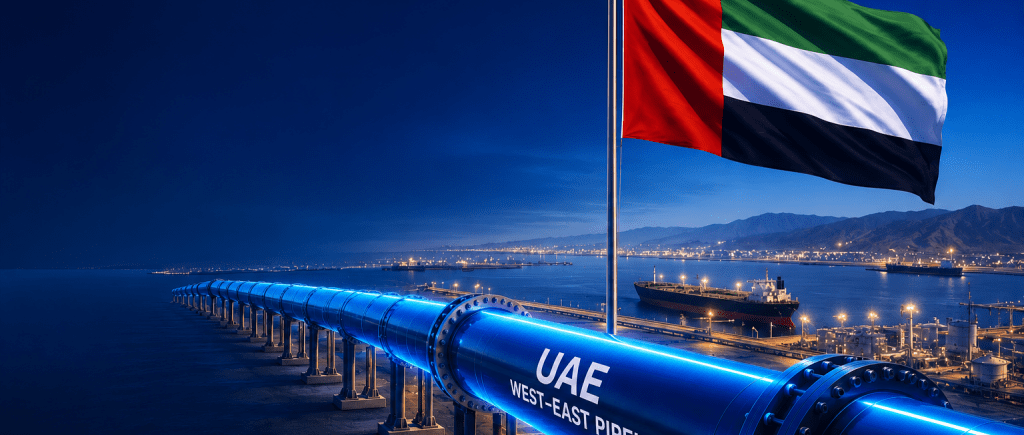
The new pipeline, expected to become operational in the coming years, will transport crude oil directly to the port of Fujairah on the Gulf of Oman. This route allows exports to avoid the Strait of Hormuz entirely, a narrow passage that has long been considered a potential flashpoint in regional conflicts.
By diversifying its export routes, the UAE is effectively strengthening its energy security and ensuring more stable access to global markets. The country already exports a large share of its oil through Fujairah via existing pipeline infrastructure, but the new system is expected to significantly expand capacity and improve resilience in times of crisis.
The move comes at a time of heightened instability in the Middle East, where tensions have repeatedly raised concerns about possible disruptions to global oil supply. Any threat to the Strait of Hormuz has historically had an immediate impact on global energy prices, given that a significant portion of the world’s oil passes through the waterway.
Beyond logistics, the project also reflects a broader strategic shift in the UAE’s energy policy. By investing in alternative export routes and infrastructure, the country is positioning itself as a more flexible and reliable supplier in global energy markets, even during periods of geopolitical uncertainty.
The development also aligns with wider changes in the UAE’s role within global oil governance, as it seeks greater autonomy in production and export decisions while expanding its long-term influence in international energy trade.
Overall, the pipeline is not just an infrastructure project, but a strategic hedge against regional risk—one that could reshape how Gulf oil reaches global markets and reduce the world’s dependence on a single vulnerable shipping route.