Noor Trends News, Technical Analysis, Educational Tools and Recommendations

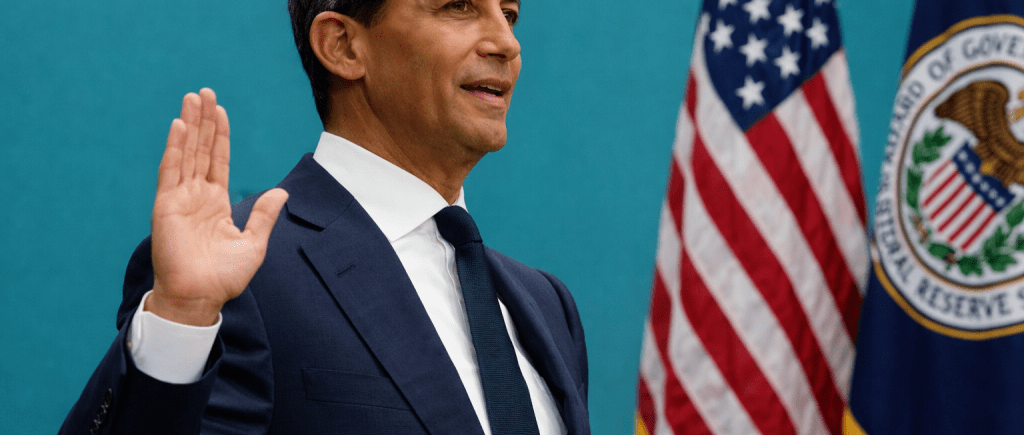
The U.S. Senate has confirmed Kevin Warsh as the new chair of the Federal Reserve in a closely watched vote, marking the start of a new leadership era for the world’s most influential central bank.
The confirmation comes at a sensitive moment for the U.S. economy, as inflation remains persistent, global risks continue to rise, and financial markets are highly sensitive to any hint of change in interest rate policy.
Warsh is set to replace Jerome Powell, whose tenure was marked by repeated clashes with political leadership over the direction of monetary policy and the pace of interest rate adjustments.
A Narrow Vote and Political Division
The confirmation vote reflected a divided political landscape, with a slim majority in favor and strong opposition from lawmakers concerned about the independence and future direction of the central bank.
The result highlights how monetary policy has become increasingly politicized, with debates over interest rates now directly tied to broader political and economic tensions in Washington.
One notable aspect of the vote was cross-party support, signaling that views on monetary policy are not strictly aligned along party lines.
The Fed Chair Role: Powerful but Not Absolute
Despite being the public face of U.S. monetary policy, the Fed chair does not control interest rates alone.
Policy decisions are made by a broader committee, meaning the chair must rely heavily on persuasion and consensus-building rather than direct authority.
This structure limits the ability of any single individual to rapidly reshape monetary policy, even in moments of transition or political pressure.
Inflation Still Driving Policy Direction
Inflation remains one of the most important forces shaping the Fed’s decisions.
Recent price pressures have remained stubborn, limiting expectations for aggressive interest rate cuts. This has kept borrowing costs elevated and added pressure on housing, credit, and business investment.
As long as inflation remains above target levels, policymakers are likely to remain cautious about loosening financial conditions too quickly.
Iran Conflict Adds New Economic Risk
Global uncertainty has increased due to escalating geopolitical tensions, particularly involving the conflict linked to Iran.
Energy markets have become more volatile, raising concerns that higher oil prices could feed into broader inflation pressures.
This creates an additional challenge for the Federal Reserve, as external shocks can quickly disrupt domestic economic stability and complicate interest rate decisions.
Political Pressure Over Interest Rates Intensifies
Alongside economic risks, political pressure on monetary policy continues to grow.
Calls for lower interest rates have become more frequent, with policymakers facing competing demands between supporting economic growth and maintaining price stability.
This tension places the new Fed leadership in a difficult position, where every decision is closely scrutinized not only by markets but also by political stakeholders.
The Challenge of Building Consensus Inside the Fed
Inside the Federal Reserve, policy decisions are shaped through discussion and agreement rather than command.
The Fed chair plays a central role in guiding debates, setting the tone for meetings, and helping align different views among committee members.
However, disagreement is not uncommon, especially during periods of economic uncertainty. Even small differences in outlook can influence how quickly or slowly the central bank adjusts policy.
Markets Expect Stability, Not Immediate Change
Despite the leadership transition, financial markets are not expecting an immediate shift in interest rate policy.
Inflation remains elevated, and economic data has not shown enough weakening to justify rapid easing.
As a result, investors are preparing for a period of relative stability in rates, while closely watching incoming economic data for signs of future policy direction.
Powell’s Unusual Continued Presence
Adding to the complexity, the former Fed chair is expected to remain on the board, an uncommon situation in modern central banking.
While he is expected to take a lower-profile role, his experience and long tenure mean his views may still carry influence within discussions.
This creates an unusual dynamic where past and present leadership overlap during a sensitive policy period.
The new Fed leadership enters office facing a combination of inflation pressure, geopolitical risk, political scrutiny, and market sensitivity.
The key challenge will be balancing independence with communication, and stability with responsiveness, in an environment where even small policy signals can move global markets. For now, attention turns to the next policy meetings, where the real test of leadership and direction will begin.