Noor Trends News, Technical Analysis, Educational Tools and Recommendations

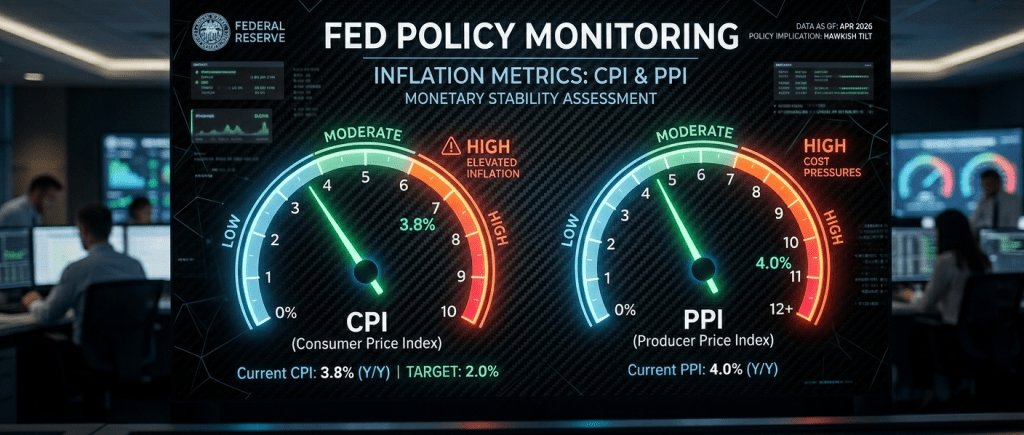
Federal Reserve Bank of Minneapolis President Neel Kashkari has reiterated that inflation remains “too high,” stressing that bringing price pressures back to the 2% target is still the central priority for policymakers.
He emphasized that the Federal Reserve should not shift its inflation goal and warned that inflationary shocks continue to complicate the central bank’s job, even if they do not change its mandate. According to him, the path back to price stability has become more uncertain, particularly in light of recent geopolitical developments.
Kashkari noted that before the latest escalation in Middle East tensions, there had been growing confidence that inflation was gradually moving toward the 2% objective. However, that progress now appears more fragile.
Middle East Conflict Raises Inflation and Energy Shock Risks
A key concern highlighted by Kashkari is the potential economic impact of disruptions in the Strait of Hormuz, one of the world’s most critical energy transit routes. He warned that the duration of any closure could have a significant impact on inflation dynamics.
The ongoing geopolitical uncertainty, particularly surrounding Iran-related tensions, has introduced a new layer of inflation risk through potential energy shocks. These shocks, he explained, tend to push prices higher while simultaneously creating uncertainty for global growth.
He also stressed that such developments do not reduce the Federal Reserve’s responsibility to maintain price stability, even though they make policy decisions more difficult.
Labor Market Shows Signs of Cooling but Remains Stable
On the domestic economy, Kashkari described the US labor market as “lukewarm,” suggesting a gradual cooling rather than a sharp slowdown. He noted that employment conditions appear to be moving sideways, with no dramatic deterioration but also limited signs of strong momentum.
While the job market is still holding up, he indicated that it is not strong enough to offset broader inflation concerns if energy-driven price pressures intensify.
Policy Path Uncertain: Rates Could Stay High or Move Higher
Kashkari reiterated that maintaining a restrictive policy stance may remain necessary for some time to ensure inflation is fully contained. He also left the door open to further tightening, noting that inflation shocks could force additional policy responses if conditions worsen.
At the same time, he acknowledged that external shocks make the outlook more complex, particularly when inflation and growth risks move in opposite directions. He added that interest rate decisions may not have a direct or immediate impact on mortgage rates, highlighting the limits of monetary policy transmission in the current environment.
Another Fed Voice Warns of Prolonged Policy Tightness
Separately, Federal Reserve Bank of Boston President Susan Collins also underscored the growing policy challenges linked to geopolitical instability, particularly prolonged conflict in the Middle East. She stated that the central bank may need to maintain a restrictive policy stance for an extended period, while also noting that a faster resolution to geopolitical tensions could support stronger demand but potentially increase inflationary pressure and unemployment dynamics in the US.
Collins warned that in certain scenarios, the Federal Reserve could even face the possibility of needing to raise interest rates further to contain inflation pressures, especially if energy-driven shocks persist. She stressed that inflation is unlikely to fully ease in the near term, suggesting it could remain elevated through this year before gradually cooling later in the cycle. Maintaining well-anchored inflation expectations, she said, remains essential for long-term stability.
Energy Shocks Complicate the Inflation Outlook
Both policymakers highlighted a shared concern: energy shocks create a difficult balance for monetary policy by simultaneously increasing inflation risks while weakening growth prospects.
Collins noted that inflation persistence makes it harder for policymakers to look through temporary shocks, particularly when those shocks affect core pricing behavior and expectations.
While she acknowledged that the US economy is somewhat more resilient to energy shocks than in previous decades, she warned that prolonged geopolitical instability still poses a significant upside risk to inflation and a downside risk to growth.
Outlook: Inflation Battle Far From Over
Taken together, the comments from Federal Reserve officials signal that the fight against inflation is not yet complete. Despite earlier signs of progress, geopolitical risks and energy market volatility have reintroduced uncertainty into the policy path.
The central message from policymakers remains cautious: inflation control remains the priority, policy is likely to stay restrictive, and further shocks could still reshape the trajectory of interest rates in the months ahead.