Noor Trends News, Technical Analysis, Educational Tools and Recommendations

Key Takeaways
- Gold extends losses: Spot gold fell 0.3% to $4,532.11 per ounce, while gold futures dropped 0.6% to $4,532.05.
- Dramatic fall from peak: Bullion has dropped sharply from around $5,400 per ounce before the conflict began in late February.
- Oil rebounds: Brent crude advanced again, well above pre-war levels, reigniting inflation fears.
- Rate hike fears mount: The prospect of elevated borrowing costs from energy-driven inflation continues to weigh on non-yielding gold.
- Dollar near 6-week high: The greenback’s safe-haven appeal and U.S. energy exporter status continue to pressure bullion.
- UBS warning: Dominic Schnider noted “inflationary pressures are rising, increasing the burden on central banks.”
- Pakistan diplomacy intensifies: Iran’s foreign minister met Pakistan’s interior minister to bridge gaps in peace proposals.
- Pakistan’s mediating role: Interior Minister Syed Mohsin Naqvi is working to forge a peace framework between both sides.
- “Good signs” but cautious: Rubio flagged progress but said he didn’t want to be “overly optimistic.”
- Gaps narrowing: A senior Iranian official told Reuters differences in negotiations have shrunk.
- Uranium report disputed: The White House pushed back against Reuters’ report on Khamenei’s uranium directive, calling it false.
- Hormuz toll battle: Trump opposes efforts by Iran and Oman to establish a toll system through the strait.
- Strait still closed: Hormuz remains all but shut, keeping oil elevated and inflation fears alive.
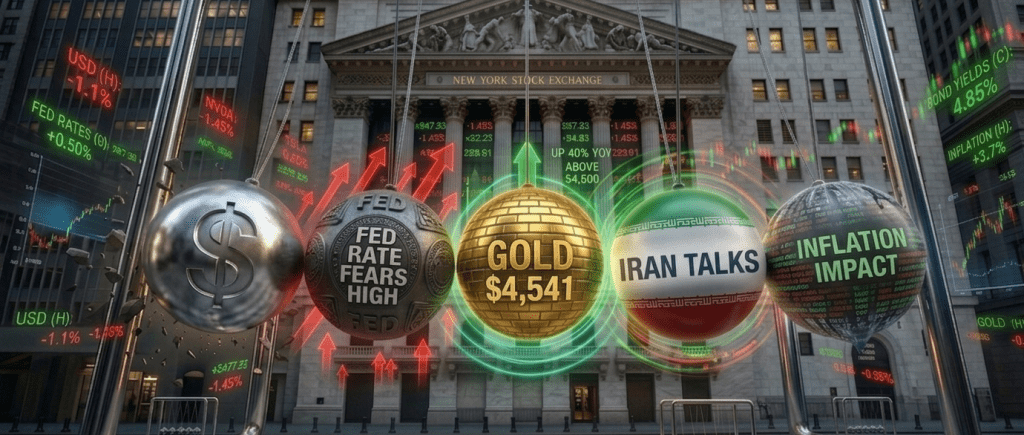
Gold prices edged lower on Friday, weighed down by a renewed uptick in oil prices that exacerbated inflation worries and fed expectations for a potential U.S. interest rate hike later this year.
By 06:00 ET (10:00 GMT), spot gold had declined 0.3% to $4,532.11 an ounce, while gold futures were down 0.6% at $4,532.05 an ounce.
Brent crude futures, the global oil benchmark, advanced once again and remain well above pre-war levels. Concerns have abounded that the energy shock will fuel wider price gains around the world, potentially persuading central banks — including the Federal Reserve — to consider lifting rates in response.
The prospect of elevated borrowing costs has dented the appeal of non-yielding assets like gold. Since sitting at around $5,400 an ounce prior to the start of the conflict in late February, the price of bullion has fallen sharply.
Meanwhile, the U.S. dollar is now perched at an almost six-week high — possibly making gold more expensive for overseas buyers. The greenback has been viewed as a relative safe haven during the Iran war, partly due to the belief among some investors that the American economy, as a large energy exporter, may be insulated from the oil price spike.
“Recent macroeconomic data point to softer economic activity amid higher oil prices. At the same time, inflationary pressures are rising, increasing the burden on central banks — particularly those with a single mandate on price stability,” said Dominic Schnider, Head Global FX & Commodity at UBS Global Wealth Management, in a research note.
Iran Peace Talks Swing Between Hope and Despair
Much of the attention is now fixed on a steady stream of reports on diplomatic efforts to conclude the war. Hopes around a permanent detente have been both brightened and dimmed this week, as sentiment is swayed by often contradictory reports.
Iran’s foreign minister met with the interior minister of Pakistan on Friday, with discussions focused on bridging key divides between the United States and Tehran over peace proposals, Iranian media reported.
The gathering comes two days after Pakistan presented Iran with the latest U.S. message in the negotiations, Reuters reported, citing the semi-official Tasnim and ISNA news agencies. Islamabad has frequently acted as a mediator between the two sides.
According to ISNA, Pakistan’s Interior Minister Syed Mohsin Naqvi is attempting to forge a framework for ending the war and resolving differences between both parties.
U.S. Secretary of State Marco Rubio said discussions have shown “good signs” of progress, although he flagged that he did not want to be “overly optimistic” and was waiting to “see what happens over the next few days.”
Meanwhile, a senior Iranian official quoted by Reuters said that gaps in negotiations have narrowed. However, a major fault line emerged on Thursday when the news agency reported that Iran’s Supreme Leader Mojtaba Khamenei had issued a directive that no enriched uranium should leave the country — hardening Tehran’s stance against one of President Donald Trump’s major demands.
The White House pushed back against the report, describing it as false, Fox News reported, citing a person directly involved in the negotiations.
Hormuz Toll Battle
Washington and Iran are now locked in a protracted ceasefire that has lasted longer than the initial phase of bombardments beginning in late February. The U.S. and Israel launched a joint assault on Iran, sparking a wave of attacks that spread to other areas of the Middle East, including major energy-producing Gulf nations.
Questions are also swirling around the status of the Strait of Hormuz, with Trump opposing efforts by Iran and Oman to establish a toll system for traversing the narrow conduit through which roughly a fifth of the world’s oil flows. Crucially, the strait remains all but closed to tanker traffic — keeping upward pressure on oil prices and fueling worries over a wave of inflation worldwide.