Noor Trends News, Technical Analysis, Educational Tools and Recommendations


Key Takeaways:
- Wall Street opens higher: Equities caught a bid Tuesday, led by a 0.9% jump in the Nasdaq, following a cooler-than-anticipated Producer Price Index (PPI) report.
- Core inflation shows restraint: While headline PPI jumped to 4.0% year-over-year due to energy shocks, core PPI rose just 0.1% for the month, easing fears of runaway, broad-based inflation.
- Diplomatic channels remain open: President Trump noted Iranian officials reached out to “make a deal,” as Pakistan offers to host a second round of ceasefire negotiations.
- Israel-Lebanon talks commence: Direct peace talks between Israel and Lebanon kick off in Washington, mediated by U.S. Secretary of State Marco Rubio, in a bid to resolve a major hurdle to the broader U.S.-Iran truce.
- Global growth downgraded: The IMF revised its global growth projections downward to 3.1% for the year, citing the economic toll of the Middle East conflict.
Wall Street opened firmly in positive territory on Tuesday, shaking off early futures volatility as investors welcomed a significantly better-than-anticipated U.S. producer inflation report. The reassuring economic data provided a much-needed counterbalance as markets continue to navigate the geopolitical complexities of the ongoing U.S.-Iran conflict and the newly implemented naval blockade in the Middle East.
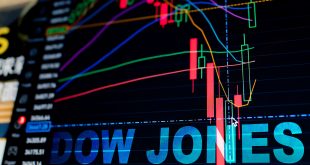
By early morning trading, the benchmark S&P 500 index had climbed 0.3% to 6,908.52 points. The tech-heavy NASDAQ Composite led the charge with a robust 0.9% gain to reach 23,385.28 points, while the blue-chip Dow Jones Industrial Average added fractionally to sit at 48,235.61 points.
Headline PPI Surges on Energy, But Core Offers Relief
While the Middle East conflict continues to dominate global headlines, the immediate spotlight on Wall Street was fixed on key inflation data. According to the U.S. Bureau of Labor Statistics, the March Producer Price Index (PPI) ticked up 0.5% month-over-month and 4.0% year-over-year. Crucially, these figures arrived well below the consensus estimates of a 1.1% monthly jump and a 4.6% annual surge.
When stripping out the highly volatile food and energy sectors, the underlying inflation narrative proved even more encouraging. Core PPI gained a mere 0.1% month-over-month and 3.8% year-over-year.
The 12-month increase in the headline figure represents the largest jump since February 2023, driven almost entirely by a massive 8.5% month-over-month spike in the index for final demand energy prices. The PPI print closely mirrors the dynamics seen in last Friday’s Consumer Price Index (CPI) report: surging oil prices stemming from the Iran war are aggressively inflating headline figures, but the underlying “core” metrics remain relatively insulated for now.
However, the broader macroeconomic toll of the geopolitical shock is becoming undeniable. On Tuesday, the International Monetary Fund (IMF) released its latest World Economic Outlook, downgrading projected global growth to 3.1% for this year and 3.2% in 2027, citing the disruptive impact of the war.
Markets Shake Off Initial Disappointment as Diplomacy Continues
Wall Street’s Tuesday gains build on a solid rebound from the previous session, as initial market disappointment over the weekend’s failed ceasefire talks began to fade. Analysts at ING noted the market’s resilience, stating that while the headlines offer little reason for outright optimism, investors are taking a measured “wait-and-see” approach, keeping the proverbial glass “half-full” for risk assets.
Behind the scenes, diplomatic efforts appear to be grinding forward. Despite the tense standoff, Reuters reported that both Washington and Tehran have maintained backchannel engagements, showing forward motion toward making their temporary two-week ceasefire permanent. President Donald Trump publicly confirmed that the White House had been contacted by Iranian officials expressing a desire to “make a deal.” Washington’s core demand reportedly remains a 20-year freeze on Iranian uranium enrichment to ensure the nation cannot produce a nuclear weapon.
Pakistan, which has quickly emerged as a central mediator in the crisis, has offered to host a second round of discussions in Islamabad before the current ceasefire window closes.
Israel-Lebanon Talks Aim to Clear a Major Hurdle
In a highly significant parallel development, Israel and Lebanon are scheduled to begin direct peace talks in Washington on Tuesday.
Recent Israeli airstrikes targeting Iran-aligned Hezbollah positions in Lebanon have been a massive sticking point, frequently threatening to derail the fragile U.S.-Iran truce. U.S. Secretary of State Marco Rubio is set to directly participate in the discussions between Israel and Lebanon, aiming to secure a localized resolution that could effectively safeguard the broader regional peace efforts.
Blockade Keeps Energy Markets on Edge
Despite the diplomatic momentum, the physical realities of the conflict continue to cap market exuberance. The U.S. military blockade of Iranian ports is now active, significantly raising the risk of further restricting already shuttered oil flows through the Strait of Hormuz.
While oil prices have cooled slightly from their recent highs on the back of diplomatic hopes, they remain well above pre-war levels. The International Energy Agency (IEA) has warned that current crude prices may not yet be fully factoring in the severity of the supply shock, keeping global energy markets in a precarious balancing act as the week unfolds.