Noor Trends News, Technical Analysis, Educational Tools and Recommendations

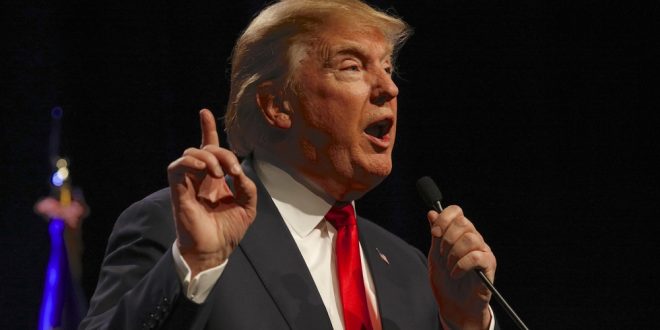
Key Takeaways:
- Ceasefire Extended: President Trump has paused further U.S. military strikes to give Tehran time to present a “unified negotiating proposal.”
- Diplomatic Deadlock: U.S. Vice President JD Vance canceled his diplomatic trip to Pakistan after Iran officially refused to attend negotiations while under blockade.
- Economic Stranglehold: The U.S. naval blockade remains in full force, with Trump claiming the squeeze is costing Iran $500 million per day.
- “Act of War”: Iranian officials denounce the ongoing blockade and recent ship seizures as acts of war, keeping the vital Strait of Hormuz firmly closed to global shipping.
- Market Impact: Wall Street closed lower and crude oil edged up as the prolonged energy impasse threatens to reignite global inflation.
President Donald Trump announced on Tuesday that he is extending the U.S.-Iran ceasefire, pivoting from his earlier stance that an extension was highly unlikely. The decision comes after highly anticipated peace talks in Pakistan collapsed, leaving the geopolitical landscape fraught with uncertainty as the U.S. naval blockade continues to paralyze the Strait of Hormuz.
An Indefinite Pause on Strikes
The announcement, made via Trump’s Truth Social platform, indicated that the U.S. military will hold off on active strikes until Iranian leadership can consolidate a cohesive diplomatic strategy.
“We have been asked to hold our Attack on the Country of Iran until such time as their leaders and representatives can come up with a unified proposal,” Trump stated. “I have therefore directed our Military to continue the Blockade and, in all other respects, remain ready and able, and will therefore extend the Ceasefire until such time as their proposal is submitted, and discussions are concluded, one way or the other.”
In subsequent statements, the President touted the crippling financial impact of the ongoing military pressure, claiming that Iran is hemorrhaging $500 million per day due to the U.S. naval blockade. Despite accusing Tehran of breaking the truce “numerous times,” Trump struck an optimistic tone in an interview with CNBC, stating that the U.S. is in a “very strong negotiating position” and ultimately expects to secure a “great deal” that ends Iran’s nuclear ambitions.
Diplomatic Breakdown in Islamabad
While the ceasefire holds, the diplomatic backchannels have effectively frozen. The future of U.S.-Iran peace talks appeared bleak on Tuesday after planned negotiations completely unraveled.
Just ahead of the closing bell on Wall Street, Iran’s Tasnim News Agency cited an Iranian official confirming that Tehran would not attend the upcoming talks. Following the announcement, U.S. Vice President JD Vance abruptly called off his scheduled diplomatic trip to Islamabad.
Iran has maintained a steadfast position: no future peace talks will take place as long as the United States maintains its aggressive naval blockade on the country’s ports and coastlines.
The Strait of Hormuz Impasse
The diplomatic gridlock leaves the Strait of Hormuz—a vital maritime conduit facilitating roughly a fifth of the world’s oil supply—completely shuttered.
Last week, a brief reopening of the strait by Iran sparked a massive risk-on rally, sending stocks sharply higher and cratering oil prices. However, the optimism was shattered over the weekend when U.S. forces seized an Iranian-flagged cargo ship attempting to bypass the blockade.
Tehran reacted with fury. Iranian Foreign Minister Abbas Araghchi took to X on Tuesday to denounce the U.S. actions. “Blockading Iranian ports is an act of war and thus a violation of the ceasefire. Striking a commercial vessel and taking its crew hostage is an even greater violation,” Araghchi stated, reiterating that the strait is closed due to the U.S. military presence.
While Trump argued to CNBC that the blockade is a “tremendous success” and that the U.S. now “totally controls” the strait, the global economic fallout is becoming impossible to ignore. A weeks-long closure of the channel has caused a significant spike in oil prices, stoking fears of sticky inflation and a broader slowdown in global economic growth.
Regional Ripple Effects and Market Reaction
Adding to the complex geopolitical web, the Pentagon announced on Tuesday that it had boarded a sanctioned tanker in the Indo-Pacific region as part of a broader effort to disrupt supply lines supporting Iran. Meanwhile, Israel’s military accused Hezbollah of launching “several rockets” from southern Lebanon, calling it a “blatant violation” of their separate, ongoing ceasefire.
The weight of the collapsed talks and the persistent energy blockade dragged on risk assets. U.S. stocks ended the session lower, cooling the rally that kicked off the week, while global crude prices edged up, remaining stubbornly well above their pre-war levels.