Noor Trends News, Technical Analysis, Educational Tools and Recommendations

Beyond Oil: A Wider Shockwave
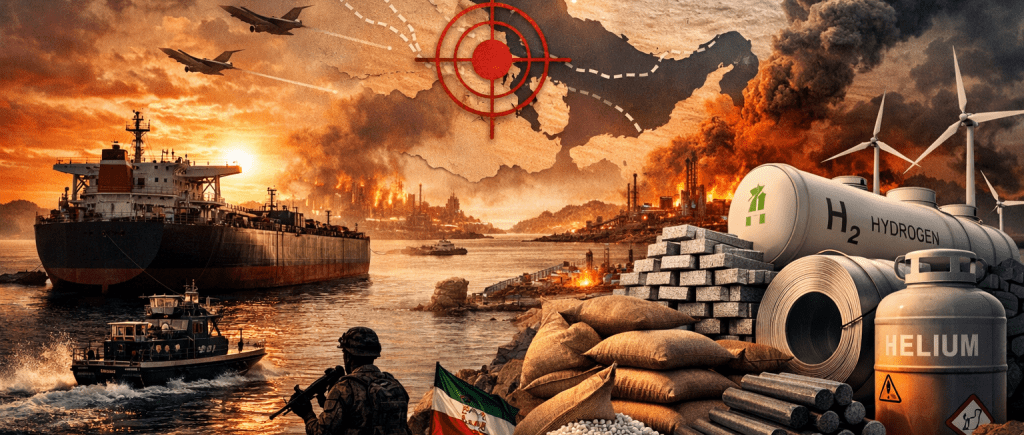
The Strait of Hormuz has long been the world’s most critical energy artery, but the current conflict in the Middle East has revealed a deeper vulnerability. With shipping routes disrupted and infrastructure damaged, the crisis is not only driving oil and gas prices higher—it’s also choking off the flow of essential non-oil commodities that underpin agriculture, manufacturing, and the green energy transition.
Fertilizers and Food Security
The Gulf region is a powerhouse for fertilizer exports, especially urea and ammonia. With nearly half of global trade tied to this corridor, countries like India, Brazil, and China face rising costs for crop production. The ripple effect? Higher food prices and mounting inflationary pressure worldwide.
Sulfur: The Hidden Energy Material
Sulfur, a byproduct of oil and gas refining, is indispensable for both battery chemistry and phosphate fertilizers. With nearly half of global sulfur trade passing through Hormuz, shortages are slowing industrial hubs and threatening sustainable farming and clean energy projects.
Methanol and the Chemical Chain
One-third of global methanol shipments move through this strait. As supplies tighten, industries that rely on resins, coatings, plastics, and synthetic fibers are bracing for higher costs—especially in China, the world’s largest buyer.
Graphite: Fueling the EV Revolution
Synthetic graphite, crucial for electric vehicle batteries, depends on petroleum coke from oil refining. With refineries prioritizing more profitable outputs, graphite supply is shrinking, adding strain to already expensive EV battery production.
Aluminium Under Pressure
The Gulf produces nearly a tenth of the world’s primary aluminium. Disruptions have pulled thousands of tonnes from global markets, rattling industries from construction to renewable energy.
Helium: From Chips to Healthcare
Qatar’s helium exports—about one-third of global supply—are vital for semiconductors and MRI machines. Shortages threaten both technological progress and critical healthcare services.
Glycol and Textiles
Monoethylene glycol (MEG), essential for polyester and packaging, is another Gulf export now in jeopardy. Asian economies reliant on Gulf shipments are scrambling for alternatives, pushing prices upward.
Iron Ore and Steelmaking
High-grade iron ore pellets and direct-reduced iron from the Gulf are premium feedstocks for steel. Shipping delays and rising freight costs are squeezing margins in an already fragile industry.
Green Hydrogen Dreams on Hold
The Middle East has been positioning itself as a hub for green hydrogen. Yet instability and shipping uncertainty are slowing investment and project timelines, casting doubt on the pace of the clean energy transition.
The Bigger Picture
This crisis is more than a temporary shock—it’s a wake-up call. Governments and industries are treating access to fertilizers, metals, and chemicals as matters of national security. The push for resilience and diversification in global supply chains is no longer optional; it’s urgent.