Noor Trends News, Technical Analysis, Educational Tools and Recommendations

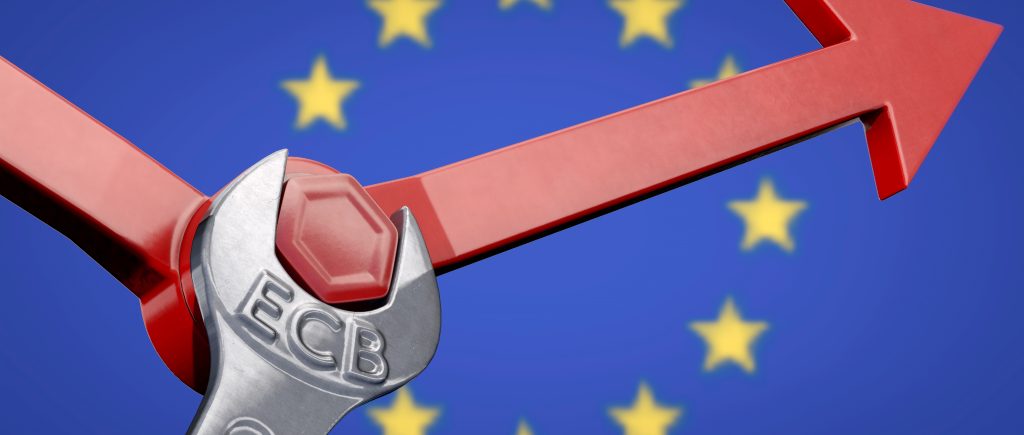
European Central Bank policymakers are signaling a cautious stance as they prepare for their late-April meeting, with many leaning toward keeping interest rates unchanged. The decision reflects a desire to better assess the economic fallout from the ongoing conflict in the Middle East before committing to any policy shift.
Officials argue that tighter financing conditions are currently helping to anchor inflation expectations, and a rate hike at this stage may not significantly alter market dynamics. However, the war-driven surge in energy costs has already pushed inflation in the eurozone to 2.5% in March, raising concerns about how long elevated prices might persist.
The ECB faces a delicate balancing act. On one hand, governments and businesses are bracing for slower growth and weaker demand. On the other, inflation remains close to the bank’s 2% target, leaving room for patience. Historical lessons weigh heavily: in 2011, premature rate hikes during the euro debt crisis had to be quickly reversed, while in 2022, a delayed response to Russia’s invasion of Ukraine contributed to runaway inflation.
With peace negotiations underway, policymakers hope the economic damage can be contained. Still, investors are betting on at least two quarter-point increases later this year, while international voices urge caution, warning that tightening too soon could undermine fragile growth.
For now, the ECB appears set to wait and watch, prioritizing flexibility over haste as Europe navigates another period of geopolitical and economic turbulence.
Stronger Monetary Tightening Ahead
Recent estimates suggest the ECB is preparing for at least two interest rate hikes this year, each by 25 basis points, bringing the main rate to 2.5% by September. This move reflects the bank’s determination to contain inflationary pressures that threaten price stability across the region.
Mounting Inflationary Pressures
According to UBS’s European Economic Perspectives report, risks lean toward more aggressive tightening. If inflationary “second-round effects” spread beyond the energy sector into broader consumer prices, the ECB may act sooner than expected. The Governing Council could even surprise markets with an earlier hike if inflation accelerates dangerously.
Stagflation: A Rare and Risky Scenario
UBS describes the current environment as stagflation—an unusual mix of high inflation and weak growth. While raising rates can help tame prices, it risks further dampening investment and consumption, deepening the slowdown. This makes monetary policy less effective and more perilous.
Diverging Paths Across Europe
While the ECB leans toward tightening, other European central banks are taking different approaches. The Bank of England is expected to hold rates steady, with a possible cut later in 2026. Switzerland’s central bank plans to keep rates at 0.00% until mid-2027, relying on the strong franc to shield against imported inflation. Sweden’s central bank is likely to maintain rates at 1.75% amid easing domestic inflation. These contrasting strategies highlight the diverse economic conditions across Europe, complicating the ECB’s task of managing a vast and varied region.
The Geopolitical Wildcard: Strait of Hormuz
Talks in Islamabad, known as the Safe Opening Talks, could prove decisive. If successful, reopening the Strait of Hormuz to oil tankers would ease energy pressures and give the ECB more room to maneuver. Failure, however, could push energy prices higher, forcing the bank into harsher tightening even at the expense of growth.
The ECB is entering a critical phase where geopolitical risks and domestic economic challenges intersect. Inflation demands decisive action, yet excessive tightening could push the eurozone deeper into recession. While UBS forecasts two hikes this year, the final path will depend heavily on Middle East developments, energy supply stability, and diplomatic outcomes. The year ahead promises tough decisions for the ECB, as it strives to safeguard price stability without tipping Europe into a deeper economic downturn.