Noor Trends News, Technical Analysis, Educational Tools and Recommendations

Key Takeaways
- Rates held at 2%: The ECB kept its key deposit rate unchanged, sticking with a “steady-hand approach” as expected.
- Stagflation warning: ING analysts highlighted “increasing stagflationary pressures” in the eurozone — a toxic mix of high inflation and stagnant growth.
- Oil and gas pain: The Iran war has driven a sharp climb in oil and gas costs, “pushing up inflation and weighing on economic sentiment,” the ECB said.
- Inflation accelerates: Eurozone CPI rose to 3.0% in April from 2.6% in March, fueled largely by surging energy costs.
- Growth disappoints: Q1 GDP grew just 0.1% quarter-on-quarter — below the 0.2% expected and matching prior weakness.
- No pre-commitment: The ECB’s Governing Council stressed it is not locking itself into a particular rate path, calibrating policy meeting-by-meeting.
- Length matters: The longer the war continues, the stronger the impact on inflation and the economy, the ECB warned.
- Future hikes possible: Sticky inflation could bolster the case for rate increases later this year.
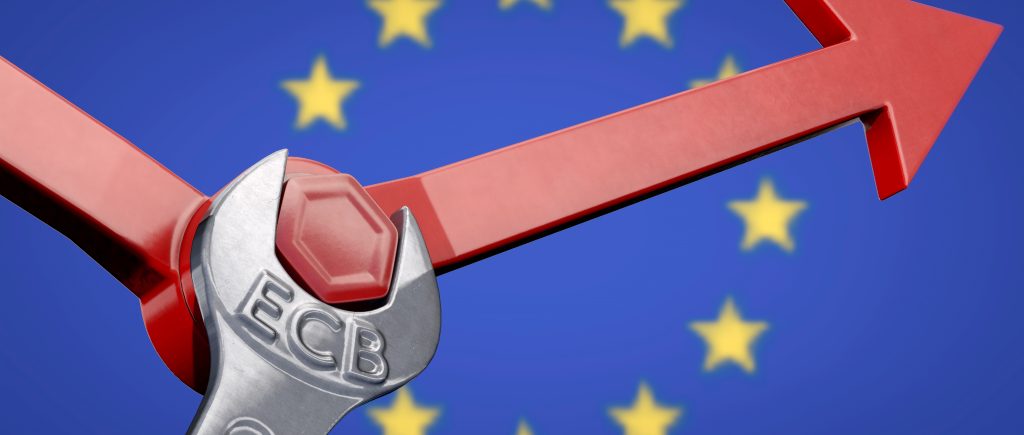
The European Central Bank left interest rates unchanged as widely anticipated on Thursday, but cautioned about intensifying risks from climbing inflation and decelerating economic growth tied to the energy shock caused by the Iran war.
In keeping its key deposit rate steady at 2%, the ECB said that incoming data has been “broadly consistent” with its previous assessment of the inflation outlook.
However, policymakers flagged that the fighting in the Middle East has driven a sharp increase in oil and gas costs, “pushing up inflation and weighing on economic sentiment.”
“The implications of the war for medium-term inflation and economic activity will depend on the intensity and duration of the energy price shock and the scale of its indirect and second-round effects,” the ECB said in its statement.
“The longer the war continues and the longer energy prices remain high, the stronger is the likely impact on broader inflation and the economy.”
A Steady-Hand Approach Amid Stagflation Fears
Although officials indicated that future interest rate decisions will hinge on their evaluation of the inflation trajectory and the risks surrounding it, the rate-setting Governing Council emphasized that it is not pre-committing to any particular rate path. Policymakers reiterated that they will calibrate borrowing costs as needed to keep inflation sustainably anchored at 2%.
“The ECB has kept interest rates on hold and stuck to a steady-hand approach, acknowledging increasing stagflationary pressures in the eurozone,” analysts at ING wrote in a research note, referring to a period of elevated inflation combined with stagnant economic activity.
Inflation Climbs as Growth Stalls
Consumer price growth in the Eurozone accelerated in April, fueled by climbing energy costs and potentially strengthening the case for rate increases later this year. In the twelve months to April, inflation in the 21 countries using the euro rose by 3.0%, up from 2.6% in March and matching economists’ forecasts, according to a preliminary reading from Eurostat.
Energy costs accounted for the bulk of the increase. For weeks, oil and gas prices have remained well above the levels seen before the Iran war erupted in late February.
On a quarter-on-quarter basis, an initial measure of gross domestic product in the currency area came in at just 0.1% for the January-to-March period. Economists had been anticipating that the Eurozone would grow by 0.2%, matching the economy’s expansion in the final quarter of 2026.