Noor Trends News, Technical Analysis, Educational Tools and Recommendations

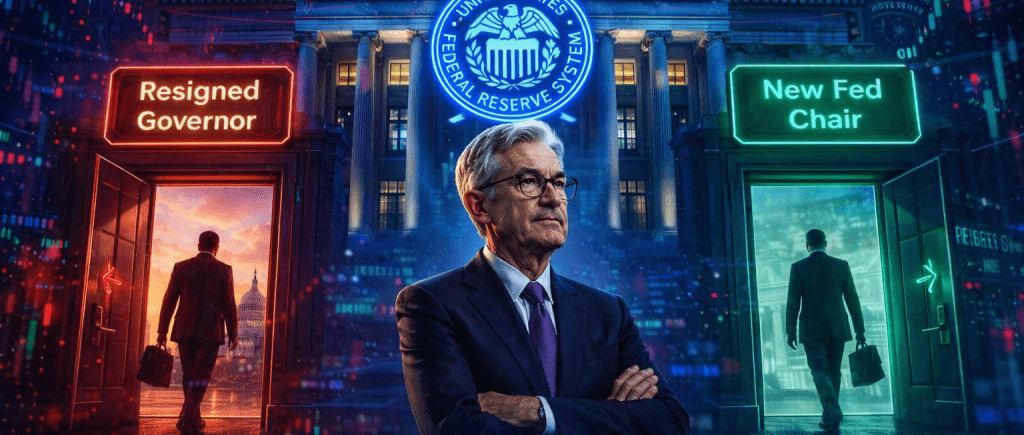
The US Federal Reserve is undergoing a notable leadership transition following the resignation of Governor Stephen Miran. His departure comes at a critical moment as the central bank prepares for a change at the top, with a new chair set to be sworn in.
The reshuffle is expected to reshape the dynamics within the Federal Reserve Board, especially as no additional open seats are available, making the timing of the resignation a key factor in smoothing the transition.
Stephen Miran Steps Down After Policy Disputes
During his time on the board, Miran was consistently associated with a more dovish stance on interest rates, repeatedly supporting lower borrowing costs. He often diverged from the majority view, arguing that monetary policy should provide stronger support for economic growth.
His resignation effectively closes a short but active tenure that was marked by frequent policy disagreements and clear advocacy for easier financial conditions.
Kevin Warsh Set to Lead the Fed
Attention is now shifting to incoming leadership as Kevin Warsh prepares to assume the role of Federal Reserve Chair.
His appointment is widely viewed as a pivotal moment for the central bank, with markets closely watching whether the new leadership will shift the balance between inflation control and economic support.
Jerome Powell’s Ongoing Influence
At the same time, Jerome Powell remains a central figure in shaping expectations around US monetary policy during this transition period.
Even as leadership changes unfold, Powell’s policy framework and communication style continue to influence market sentiment, particularly around interest rate expectations and inflation strategy.
Why This Transition Matters for Markets
Leadership changes at the Federal Reserve are closely watched because they can signal future shifts in interest rates, liquidity conditions, and overall monetary direction.
Investors often interpret such transitions as early indicators of policy recalibration, especially when incoming leadership is associated with different views on inflation and growth.
Currency Markets React to Uncertainty
Foreign exchange markets have already shown sensitivity to these developments, with the US dollar maintaining strength against several major currencies. Traders are adjusting positions as they reassess expectations for the next phase of monetary policy.
Volatility remains elevated as markets balance strong economic signals with uncertainty about the Fed’s future direction.
Outlook: A More Active Policy Phase Ahead
With a new chair preparing to take office and a key governor stepping down, the Federal Reserve is entering a more dynamic phase. The coming months are expected to bring greater clarity on whether policy will remain restrictive or gradually shift toward a more supportive stance.
For now, markets remain focused on every signal from both outgoing and incoming leadership, as the Fed’s next moves will play a decisive role in shaping global financial conditions.