Noor Trends News, Technical Analysis, Educational Tools and Recommendations

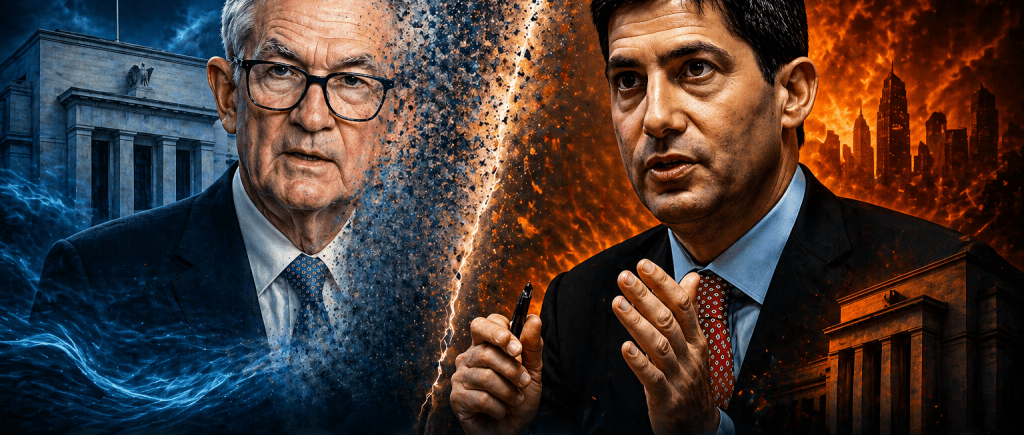
For years, investors operated under the assumption that the Federal Reserve would always step in when markets faltered — cutting rates, buying bonds, and flooding the system with liquidity. That safety net fueled one of the longest bull markets in history. But sharp criticism of Jerome Powell’s approach has raised the possibility that the next Fed chair could dismantle that framework entirely.
The Fed’s balance sheet, which ballooned to nearly $9 trillion during the pandemic, has already shrunk to about $6.6 trillion. The incoming vision calls for reducing it further, ending reliance on quantitative easing and shifting the institution back toward its core mandate. In practice, this could mean higher long-term yields, tighter financial conditions, and a market less cushioned by central bank intervention.
Breaking Away From Crisis Support
Quantitative easing — large-scale purchases of Treasuries and mortgage-backed securities — was designed to stabilize markets during crises. It worked, lowering borrowing costs and boosting asset prices after both the 2008 crash and the 2020 pandemic. But critics argue it blurred the line between monetary policy and market rescue, encouraging excessive risk-taking and inflating asset values.
The proposed shift would mark the most significant change in Fed philosophy since 2008. Instead of acting as Wall Street’s emergency backstop, the Fed could allow volatility to play out, prioritizing inflation control over asset support.
Implications for Investors
If the Fed reduces its holdings more aggressively, private investors will need to absorb more government debt, likely pushing long-term yields higher. That scenario carries wide-ranging consequences:
Mortgage rates may remain elevated
Corporate borrowing costs could stay expensive
High-growth tech stocks may face valuation pressure
Banks and cash-generating value stocks could gain an edge
With the S&P 500 still trading at rich valuations and bond yields offering real alternatives, investors may need to rethink their strategies. Companies with durable cash flow, pricing power, and manageable debt could become more attractive than speculative momentum plays built on cheap money.
Powell’s Legacy Versus the New Approach
Defenders of Powell argue that extraordinary measures were necessary to prevent deeper recessions during the pandemic and subsequent crises. Critics counter that prolonged stimulus helped fuel inflation and distorted asset prices. The nomination of a new chair signals a clear break from that approach, with less forward guidance, faster balance sheet reduction, and greater tolerance for market volatility.
Warsh’s criticism of Powell underscores a fundamental shift: the era of easy money may be ending. That doesn’t guarantee a market collapse, but it does mean investors can no longer count on abundant liquidity as the primary driver of returns. Earnings, cash flow, and fundamentals will matter more than ever. For those willing to adapt, the shift could open opportunities in value-driven sectors and restore balance to bond markets after years of suppression.