Noor Trends News, Technical Analysis, Educational Tools and Recommendations

Key Takeaways:
- Oil Cools: Brent crude slipped back below the $100 mark as renewed diplomatic efforts between Washington and Tehran eased immediate supply fears.
- Blockade Enters Day Two: The U.S. military continues to restrict access to Iranian ports and coastal areas, prompting fierce blowback from Iran and unease from Saudi Arabia.
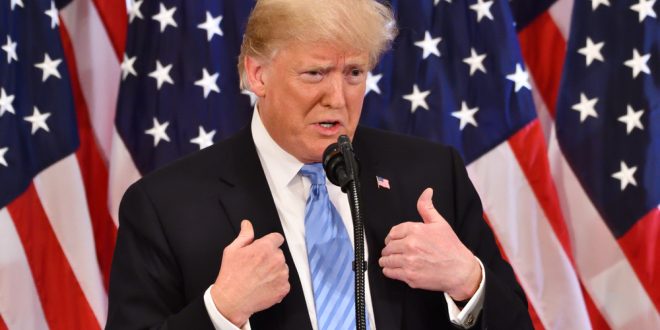
- Diplomatic Thaw: President Trump indicated that Iran has reached out to “make a deal,” while Pakistan has offered to host a second round of critical ceasefire negotiations.
- Israel-Lebanon Talks Commence: U.S. Secretary of State Marco Rubio is set to mediate direct peace talks between Israel and Lebanon in Washington, potentially resolving a major sticking point in the broader conflict.
A U.S. military blockade of Iranian ports stretched into its second day on Tuesday, but global markets found a foothold as hopes grew for potential forward momentum in peace talks between Washington and Tehran.
The complex geopolitical tug-of-war has kept financial markets on edge, but the prospect of a diplomatic off-ramp provided immediate relief to the energy sector, sending crude oil prices back below the psychological $100-a-barrel threshold.
Blockade Stokes Supply Chain Fears
The U.S. naval blockade, which President Donald Trump confirmed took effect on Monday following the collapse of weekend ceasefire talks, has severely restricted maritime access. British maritime officials noted that vessel traffic attempting to enter or depart Iranian ports—as well as coastal areas in the Persian Gulf, Gulf of Oman, and sections of the Arabian Sea—has been heavily curtailed.
The Associated Press reported that the U.S. has deployed 16 warships to the Middle East to enforce the measure, though none are currently positioned within the Persian Gulf itself. The blockade threatens to further constrain already shuttered oil flows through the Strait of Hormuz, a vital chokepoint responsible for the transit of roughly a fifth of the world’s daily oil supply.
The effective closure of the strait has been a central flashpoint since the conflict erupted in late February. Citing supply chain experts, the AP warned that the prolonged blockade could severely undermine the global flow of oil, fertilizer, food, and other essential goods, punishing consumers who are already grappling with rising prices.
Unsurprisingly, the maneuver has drawn intense regional pushback. Iran has fiercely condemned the U.S. blockade as an “act of piracy” and warned that no Persian Gulf port would remain safe if its own maritime access was threatened. Meanwhile, Saudi Arabia has actively been lobbying the U.S. to drop the blockade, fearing the action could provoke Iran into disrupting other crucial global shipping routes, according to the Wall Street Journal.
Diplomatic Backchannels Reopen
Despite the escalating military posture, diplomatic efforts appear to be gaining vital traction. Reuters reported that the U.S. and Iran have continued to engage with one another, showing some forward motion toward a permanent ceasefire framework.
President Trump noted that the White House had been contacted by Iranian officials expressing a desire to “make a deal.” He reiterated that a non-negotiable condition remains that Iran will not possess a nuclear weapon; Washington has reportedly demanded a 20-year halt on Iranian uranium enrichment as a prerequisite for peace.
Pakistan, which has quickly emerged as a key geopolitical mediator, has formally offered to host a second round of discussions before the ongoing two-week ceasefire expires.
Israel-Lebanon Talks Offer a Lifeline
In a parallel diplomatic breakthrough, Israel and Lebanon are scheduled to begin direct peace talks in Washington on Tuesday.
Recent Israeli airstrikes targeting Iran-aligned Hezbollah positions in Lebanon have been a massive sticking point, repeatedly threatening to derail the fragile halt to hostilities between the U.S. and Iran. U.S. Secretary of State Marco Rubio will directly participate in the discussions between Israel and Lebanon, aiming to secure a localized peace that could effectively save the broader U.S.-Iran truce.
Market Impact: Energy and Dollar Soften
The influx of diplomatic optimism triggered a notable cooling across key safe-haven and energy assets.
Oil prices dipped back below $100 a barrel as traders priced in a slightly lower risk of a permanent supply shock. Brent crude futures, the global benchmark, were last seen down 0.9% to $98.47 a barrel, while U.S. West Texas Intermediate (WTI) crude futures declined by 2.0% to $97.07 a barrel.
Similarly, the U.S. dollar, which has been highly sought after by investors as a safe bastion throughout the conflict, weakened slightly as risk appetite cautiously returned to the market.