 Noor Trends News, Technical Analysis, Educational Tools and Recommendations

Escalating tensions in the Middle East are sending shockwaves through global energy markets and raising new concerns for policymakers across Europe. The surge in oil and gas prices following the recent military escalation between the United States, Israel, and Iran is now threatening to trigger another inflationary wave across the eurozone.
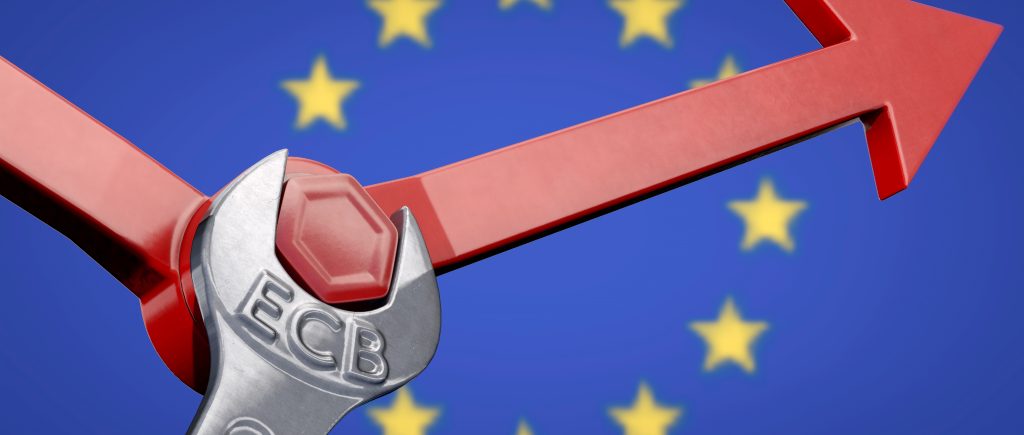
As energy markets react to the conflict and fears grow over potential disruptions to key supply routes, the pressure is mounting on the European Central Bank ahead of its highly anticipated interest rate meeting scheduled for March 19.
The developments have revived concerns that Europe could face a renewed inflation shock just as price pressures had begun to ease.
From Caution to a More Hawkish Tone
Until recently, the ECB had maintained a cautious “wait-and-see” approach, as inflation gradually moved closer to the bank’s official 2% target. However, the sudden spike in energy prices has begun to reshape the debate inside the central bank.
Several policymakers have indicated that the ECB may need to adopt a more hawkish stance if higher energy costs begin feeding into broader consumer prices in the months ahead.
Central bank officials are closely watching how oil price volatility could spill over into transportation costs, food prices, and industrial production across the eurozone economy.
Memories of Past Inflation Still Fresh
Europe’s monetary authorities remain deeply sensitive to energy-driven inflation after the surge in prices that followed the Russia–Ukraine War earlier in the decade.
That crisis triggered one of the sharpest inflation spikes in modern European history, forcing the ECB to implement aggressive interest rate hikes. As a result, policymakers are now determined to avoid repeating the delays that allowed inflation to spiral during previous energy shocks. Preventing a similar scenario has become a key priority as new geopolitical risks emerge.
Inflation Forecasts Begin to Shift
The changing energy landscape is already influencing economic forecasts. Some projections now suggest that eurozone inflation could climb to around 2.7% by the end of the year, exceeding the ECB’s 2% target.
At present, inflation across the eurozone stands at roughly 1.9%, slightly below the central bank’s goal. But the recent rise in oil and gas prices could push consumer prices higher if the trend continues. For policymakers, the key concern is whether the energy shock remains temporary or begins spreading across the broader economy.
Oil Markets Enter a Volatile Phase
The conflict has also intensified volatility in global oil markets. Analysts warn that a prolonged disruption in strategic shipping lanes or further escalation in the region could drive crude prices above $100 per barrel for an extended period.
Such a development would likely ripple through global supply chains, raising transportation costs and pushing food prices higher—two factors that directly influence consumer inflation.
In response to the growing risk, the International Energy Agency has discussed the possibility of releasing up to 400 million barrels of oil from strategic reserves to stabilize global markets. The proposed release would be significantly larger than the emergency supply measures taken during earlier crises.
Markets Await the ECB’s Next Move
Even if the ECB ultimately decides to keep interest rates unchanged at the upcoming meeting, markets expect policymakers to signal readiness to act if inflation pressures intensify.
Central banks often use strong forward guidance to influence market expectations before taking concrete policy action. A clear message that the ECB stands ready to raise rates if needed could help calm financial markets while policymakers assess the evolving situation. Yet with geopolitical developments moving rapidly and energy prices fluctuating sharply, economic forecasts may quickly become outdated.
A Critical Moment for European Monetary Policy
The upcoming meeting could mark an important turning point for Europe’s monetary strategy. If energy prices remain elevated and inflation expectations begin to rise again, the ECB may have little choice but to consider tightening policy once more.
For now, officials remain cautious. But as global tensions escalate and energy markets remain unstable, the central question facing Europe’s central bank is becoming increasingly unavoidable: Will the growing conflict force the ECB to act?