Noor Trends News, Technical Analysis, Educational Tools and Recommendations


Global markets endured an extraordinary week of dramatic volatility (ending March 22, 2026). Major central bank decisions collided with escalating geopolitical tensions in the Middle East—specifically the U.S.-Israeli-Iranian conflict. This direct threat to the Strait of Hormuz, a vital artery for 20% of global oil and gas supplies, created a high-voltage economic landscape, leaving its mark on oil, gold, Bitcoin, bonds, and currencies.
Interest Rate Decisions: A United Front Against Inflation
The world’s major central banks delivered a singular, uncompromising message: Inflation remains Public Enemy No. 1.
- The Federal Reserve: Kept rates steady at 3.50%–3.75% (11-1 vote). Chair Jerome Powell signaled that energy-driven inflation precludes any near-term cuts, shattering hopes for a quick pivot.
- The ECB & Bank of England: Both maintained a hawkish stance, with the ECB pricing in potential hikes later this year and the BoE prioritizing inflation control over growth.
- Asia: Central banks in Japan and Indonesia remain on high alert, monitoring the war’s impact on supply chains while leaning toward continued monetary tightening.
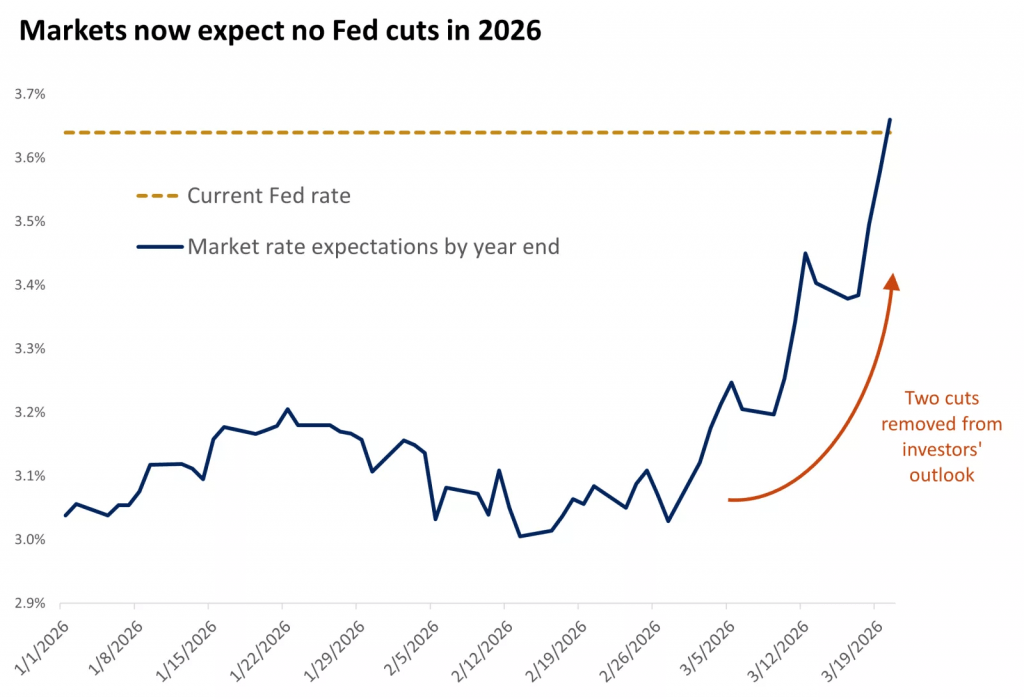
Source: Bloomberg
Energy: Supply Shock Pushes Prices Into Triple Digits
Oil prices remained stubbornly above $100 per barrel. Brent crude hovered between $100–$112, while WTI fluctuated between $90–$98. Natural gas saw violent swings amid the U.S.-Iran standoff, prompting the IEA to discuss emergency reserve releases to counter mounting inflationary pressures.
Gold: A Sharp Retreat as the Safe Haven Loses Its Luster
In a surprising twist, gold fell roughly 3% weekly (and up to 10% from previous peaks), sliding to $4,490–$4,494 per ounce. A relatively strong Dollar and surging bond yields have diminished gold’s appeal, even in a high-inflation environment.
Bitcoin & Crypto: Resilience Under Pressure
Bitcoin showed relative stability, holding near $68,500–$69,000. While tight monetary policy dampened risk appetite, continuous institutional inflows into ETFs allowed Bitcoin to outperform gold in terms of price resilience.
Bonds & Currencies: Selling Spree and Dollar Caution
- Bonds: A massive sell-off pushed the 10-year U.S. Treasury yield to 4.28%–4.39%, increasing global borrowing costs.
- Currencies: The USD saw a limited retreat. The EUR/USD stabilized near 1.155, while the Yen rose to 159 per dollar. The Egyptian Pound remained steady at an average of $0.0191.
Strategic Analysis: Is This a 1970s Repeat?
While the “Hormuz shock” is severe, experts argue the global economy is more resilient than it was during the 1970s stagflation for three reasons:
- Consumer Flexibility: Energy now accounts for only 2% of household spending (vs. 6% in the 80s).
- U.S. Energy Independence: The U.S. has been a net exporter since 2019.
- Efficiency: The global economy requires 70% less oil per unit of GDP than it did 50 years ago.
Three Scenarios for the Path Ahead
- Baseline (60%): A sharp but short-lived spike ($90–$100 oil) followed by a modest slowdown and one Fed cut in late 2026.
- Oil Shock (30%): Sustained $120+ oil, pushing inflation to 4%. The Fed stays on hold until 2027, risking a 10-15% market correction.
- De-escalation (10%): A rapid return to $70 oil, allowing two Fed cuts and a massive rally in small-caps and international stocks.
Investment Compass: Where to Position Now?
Despite the “Balance of Terror” at the Fed, solid fundamentals (AI boom and low household debt) provide a cushion.
- If Oil Stays High: Defensive plays in Energy, U.S. Large Caps, and Big Tech are preferred.
- If Tensions Ease: Small Caps, Value Stocks, and International Equities are poised for a breakout.
The Week Ahead
Markets are currently hostages to a volatile mix of geopolitics and hawkish policy. Diversification isn’t just a strategy—it is a survival requirement in this “fog of war” economy. Important economic data for the week ahead includes productivity, S&P Purchasing Managers’ Index (PMI) and consumer sentiment data.