Noor Trends News, Technical Analysis, Educational Tools and Recommendations


Global financial markets closed the week with cautious optimism. U.S. equities extended their gains, supported by solid economic fundamentals, even as geopolitical risks in the Middle East continued to cast a shadow. The ceasefire between the United States and Iran largely held, yet the ongoing closure of the Strait of Hormuz kept pressure on global energy markets amid the absence of tangible progress toward a lasting peace agreement.
Investors appeared to be discounting the most pessimistic scenarios, refocusing on the strength of U.S. economic growth and corporate performance. Recent data showed American consumers resilient in the face of higher energy prices, aided by recent tax cuts that helped offset rising fuel costs. Business confidence surveys pointed to steady, moderate growth, reinforcing risk appetite. Corporate earnings expectations remained stable across energy‑sensitive sectors, while technology companies continued to post strong results, bolstering the overall earnings outlook for the quarter. Consumer sentiment also improved, according to last Friday’s University of Michigan report.
Middle East Tensions
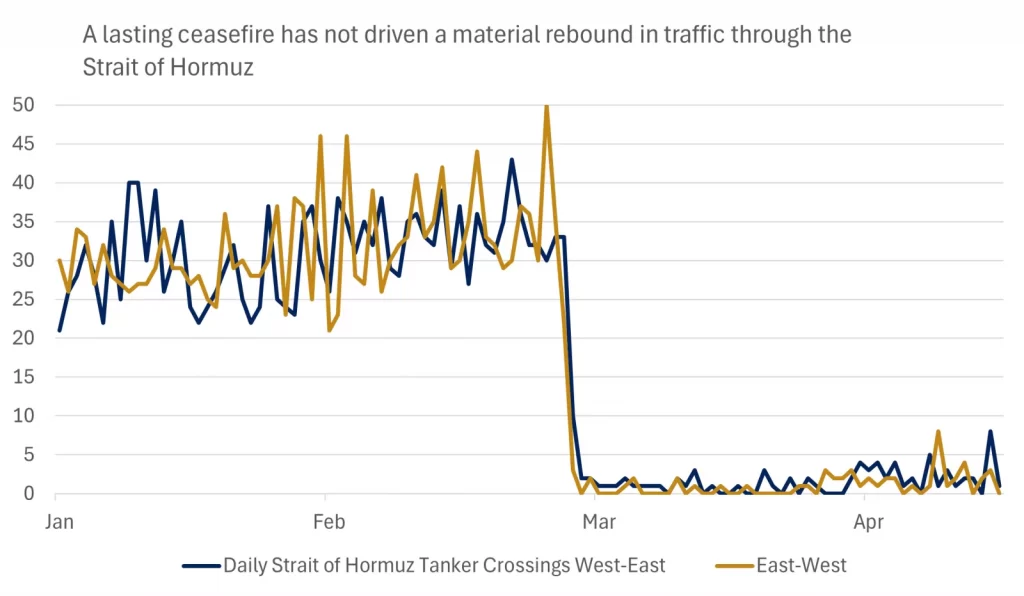
Despite the extended ceasefire, negotiations toward a permanent agreement remain stalled. Reports suggest a second round of talks may take place soon, though disagreements over Iran’s nuclear program and security guarantees persist. With the Strait of Hormuz—through which roughly one‑fifth of global oil supplies pass—still closed, crude prices climbed back to around $95 per barrel, underscoring the market’s sensitivity to any regional developments. While a diplomatic settlement remains possible in the coming weeks, delays could intensify pressure on energy prices and weigh on global economic performance.
Contradictions Dominate the Scene: Contradictions continue to drive market sentiment. The gap between official statements and realities on the ground is weighing on U.S. stocks, as headlines about peace talks coexist with ongoing military activity between Washington and Tehran. While the U.S. president speaks of peace efforts and expanded negotiations on the Israeli‑Lebanese front, Iranian military boats remain a source of tension in regional waters. This situation is believed to have prompted Trump’s “shoot and kill” orders against small Iranian vessels suspected of laying mines in the Strait of Hormuz. These conflicting signals—peace overtures versus military escalation—have left investors cautious, favoring the safety of the U.S. dollar. Any concrete progress in the Middle East could be the key to reviving risk appetite.
Israeli‑Lebanese Talks: President Donald Trump announced a three‑week extension of the ceasefire between Israel and Lebanon following a meeting at the Oval Office with representatives from both sides. In a post on Truth Social, he said the discussions “went very well,” attended also by Vice President J.D. Vance and Secretary of State Marco Rubio. Trump added that the United States would help Lebanon defend itself against Hezbollah, describing the meeting as “historic” and expressing his intention to host Israeli Prime Minister Benjamin Netanyahu and Lebanese President Joseph Aoun in the future.
Military Threat Persists: Contradictions in the Middle East deepened after the president confirmed he had ordered U.S. forces to “shoot and kill” Iranian boats suspected of deploying mines in the Strait of Hormuz—signaling readiness to resume military operations against Iran. Despite the ceasefire extension, calm has not truly taken hold. U.S. operations have expanded from securing the Strait to enforcing a global maritime blockade on Iranian oil, intercepting vessels linked to Tehran from India to Southeast Asia. Washington describes these actions as tightening sanctions to choke off Iran’s oil revenues. In response, Iran seized two ships in the Strait, demonstrating its ability to disrupt one of the world’s most critical energy corridors, even if it cannot match the scale of U.S. naval power. The result is ongoing uncertainty surrounding supply routes and shipping lanes—key pillars of global oil market stability.
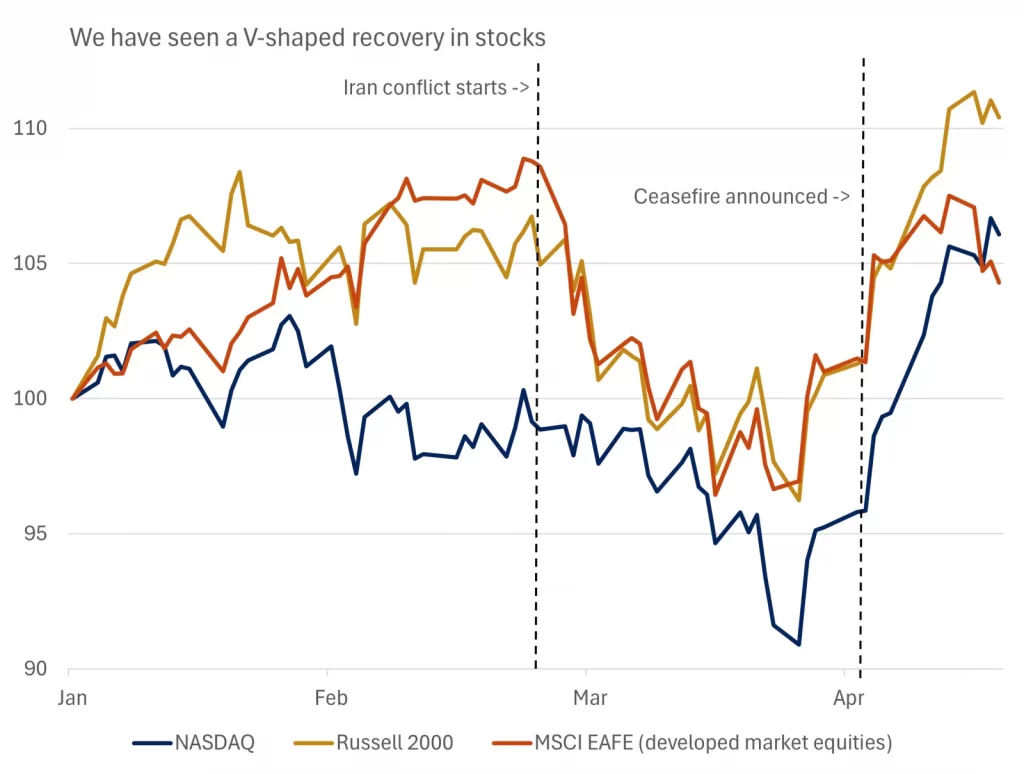
Markets Rebound: Economic data provided the week’s main relief. Improved U.S. consumer confidence helped break the risk‑off sentiment, while Wall Street gained further support after the Department of Justice ended its investigation into Federal Reserve Chairman Jerome Powell over alleged building cost overruns, transferring the matter to the Fed’s inspector general. The president had previously criticized the renovation costs amid a long‑standing dispute with Powell. News of Iran’s foreign minister planning a visit to Pakistan for a second round of talks with the United States also eased tensions and boosted investor confidence. Still, all these positive signals remain fragile—one headline could easily reverse sentiment and deepen the contradictions shaping the Middle East landscape.
Price Movements The U.S. dollar benefited from uncertainty surrounding the ceasefire’s durability and upbeat domestic data, particularly stronger consumer confidence. Gold suffered weekly losses under pressure from a stronger dollar and reduced demand for safe‑haven assets amid relative calm in the Middle East and the extension of the Lebanese ceasefire. Improved U.S. data added to gold’s weakness. U.S. equities posted weekly gains, supported by solid corporate earnings, higher consumer confidence, and the closure of the Powell investigation. Stocks also drew strength from the ceasefire extension and global PMI growth. Oil prices continued their upward trend, driven by persistent tensions in the Strait of Hormuz, reports of Iranian boats firing on cargo vessels, and the tightening of the U.S. naval blockade on Iranian ports.
Looking Ahead
In the coming week, markets await a wave of corporate earnings reports that will offer clearer insight into business performance under current conditions. Investors are also focused on the Federal Reserve meeting, expected to keep interest rates unchanged amid elevated inflation and geopolitical uncertainty. The meeting carries added significance as it may be Jerome Powell’s final one as Fed Chair.