Noor Trends News, Technical Analysis, Educational Tools and Recommendations

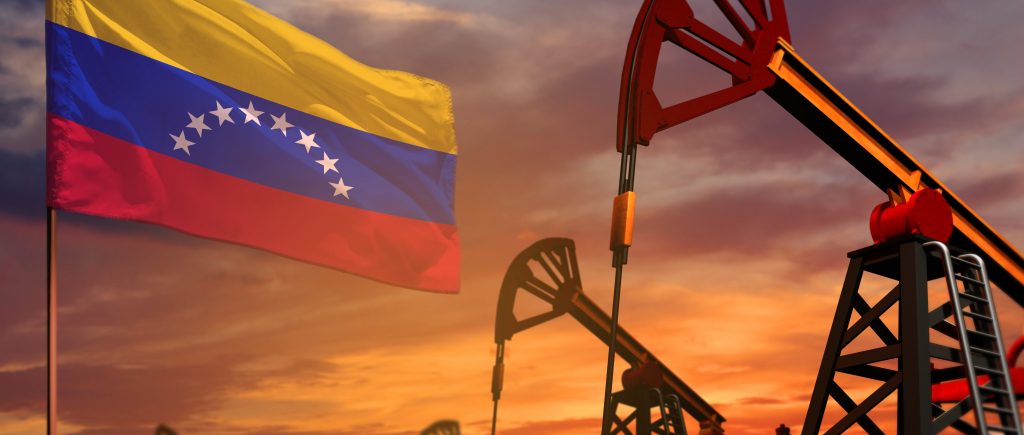
Venezuela commands the global energy throne, holding the largest strategic oil vault on the planet. With proven reserves of approximately 303 billion barrels, this geological empire accounts for nearly 20% of the world’s total oil wealth, comfortably outstripping energy titans like Saudi Arabia, Iran, and Iraq.
Yet, as of early 2026, this titan is navigating a “dramatic geopolitical metamorphosis.” Oil, once the promised engine of national prosperity, has become the epicenter of a political and economic earthquake, redrawing the power maps of Latin America in the wake of the transformative events of January 2026.
The Orinoco Ordeal: The Curse of “Extra-Heavy” Crude
Venezuela’s technical struggle is rooted in the Orinoco Belt. Unlike the light, easy-to-flow crude found elsewhere, the vast majority of Venezuelan output is classified as “Heavy” or “Extra-Heavy” oil.
A “Sour” Reputation: This is not just a liquid; it is a dense, “sour” cocktail packed with sulfur concentrations ranging from 2.4% to 4.5%. This high sulfur content demands aggressive desulfurization to meet today’s stringent global environmental standards.
The Corrosive Mix: The complexity is deepened by high concentrations of heavy metals like Vanadium and Nickel. This makes the crude “aggressive” toward refinery equipment, corroding pipelines and poisoning chemical catalysts.
The Gulf Coast Connection: Historically, this tied Venezuela to the sophisticated refineries on the U.S. Gulf Coast. These facilities are among the few globally that have invested billions in “Hydrocracking” technologies capable of cracking the code of this stubborn crude and turning it into high-value clean fuels.
The Viscosity Trap: With a gravity of 8-10 API, the oil is thick and sluggish. To flow, it requires constant dilution with imported solvents. The tightening of U.S. sanctions in December 2025 cut off this lifeline, paralyzing the nation’s ability to move its “black gold.”
The OPEC Architect: From Pioneer to the Margins
Venezuela is a founding father of OPEC. In September 1960, Venezuelan Minister Juan Pablo Pérez Alfonzo was a key engineer of the organization’s birth in Baghdad. Today, while Venezuela remains a full member, its influence has been sidelined by production decay.
In its 1990s prime, the country pumped 3.5 million barrels per day (bpd)—roughly 10% of global supply. By 2025, the average dropped to 1.1 million bpd. As of January 2026, daily output has slipped further, fluctuating between 800,000 and 1,000,000 bpd due to storage saturation following the recent export bans.
Political Earthquake: The Production Breaking Point
The removal of the previous administration in early January 2026 has left the energy sector facing a harsh reality: immense subterranean wealth cannot prevent a surface-level collapse.
Export Paralysis: By the current week, exports have ground to a halt. With storage tanks at maximum capacity, the national oil company (PDVSA) has been forced to shut down active wells.
Historical Decline: A country that once defined the market now contributes less than 1% of global production, a staggering fall from its golden era.
The Geopolitical Pivot: Beijing vs. Chevron
For years, China was the strategic anchor, taking 80% of exports. However, the December 2025 embargo severed this link, creating a vacuum that the U.S. is eager to fill to reduce Caracas’s geopolitical dependence on Beijing.
Chevron’s Lead: As the only U.S. major remaining on the ground, Chevron accounts for 25% of current output. Analysts view the company as the immediate beneficiary of the current political shift.
The Investor’s Appetite: Global giants like ExxonMobil and ConocoPhillips (still seeking $12 billion in compensation for past nationalizations) are watching closely. The price of entry is steep: an estimated $10 billion per year is needed to fix crumbling pipelines and obsolete refineries.
Market Reaction: Why the Silence from OPEC+?
Despite the geopolitical noise, global oil prices have not skyrocketed. At the January 4, 2026 meeting, OPEC+ maintained its production freeze, focusing on a global surplus of 2 to 3.8 million barrels.
Current Prices: Brent stands at $61.83 and WTI at $58.39. Markets view the Venezuelan crisis as a localized event for now, given its diminished market share.
The Long Game: While a 500,000-barrel surge in Venezuelan production could eventually push prices down, that reality is at least two years and billions of dollars away.
Conclusion: A Giant Waiting for a Miracle
Venezuela serves as a stark lesson in how natural wealth can become a burden without effective management. Washington believes the recent political shift offers a golden window to pivot Venezuela’s oil compass back toward the West.
Yet, the structural rot remains: broken pipelines, decaying refineries, and a desperate need for legislative reform. Reclaiming the glory of 2.5 million bpd is not a matter of months, but a decade-long journey. For now, Venezuela remains a “Reserve Giant,” waiting for a massive infusion of capital and technology to breathe life back into its exhausted energy heart.