Noor Trends News, Technical Analysis, Educational Tools and Recommendations

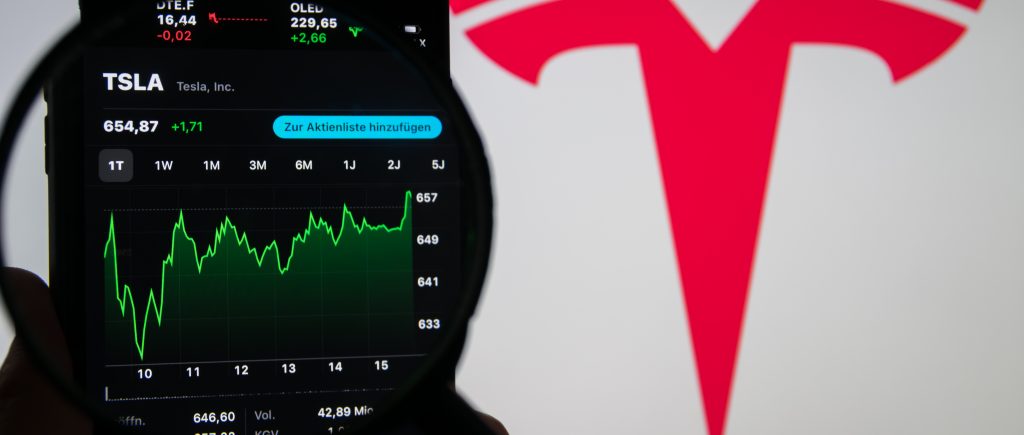
Terafab Gamble: Why Tesla May Be Headed for Its First Capital Raise in Years
Tesla is stepping into one of the most ambitious chapters in its history, but the price tag attached to its “Terafab” semiconductor project is raising serious financial questions. As the company prepares to push deeper into advanced chip manufacturing, the numbers increasingly point to one conclusion: new funding may soon be unavoidable.
At the center of the challenge is a growing imbalance between Tesla’s spending plans and its financial capacity. The company ended last year with more than $40 billion in cash and investments—a strong position on paper. However, that cushion is about to be tested. Tesla plans to more than double its capital expenditures in 2026 to exceed $20 billion, compared to roughly $8.5 billion the year before. The company has already indicated that such aggressive expansion will likely require funding beyond what it generates from its core operations.
This shift comes at a time when Tesla’s financial performance is under pressure. Revenue has slipped slightly, largely due to weakness in its automotive segment, which remains its main source of income. Profits have declined significantly, margins have tightened, and free cash flow has become far less robust. In simple terms, the company is earning less while preparing to spend much more.
If current trends continue, Tesla could move into negative free cash flow as early as 2026—before even factoring in the costs of Terafab. The project itself is expected to require between $25 billion and $40 billion over time. It aims to build a cutting-edge semiconductor facility to support Tesla’s ambitions in artificial intelligence, self-driving systems, and robotics.
While the strategic vision is bold, the financial burden is equally significant. Semiconductor fabrication is among the most capital-intensive industries in the world, typically dominated by companies with decades of specialized experience. For Tesla, entering this space at such scale adds both complexity and risk.
When combined, Tesla’s rising capital expenditures and the multi-year cost of Terafab could push total investment needs to between $80 billion and $100 billion over the next several years. That level of spending is difficult to sustain through internal cash generation alone—especially as its core automotive business faces headwinds.
This is why expectations are building around a potential capital raise. Tesla has not issued new shares in over five years, marking its longest period without tapping equity markets. However, its current valuation still provides a favorable window. Even with recent challenges, the company remains one of the most highly valued firms globally, giving it the ability to raise substantial funds with relatively limited dilution.
A gradual share sale strategy could allow Tesla to secure $10 billion to $15 billion while minimizing market disruption. Such a move would strengthen its financial flexibility and help support its long-term expansion plans.
Ultimately, the direction seems increasingly clear. Tesla’s combination of rising costs, slowing core performance, and ambitious investment plans is creating a funding gap that internal cash flow alone cannot bridge. Terafab may be the headline project, but the financial pressures behind it have been building for some time.
The question now is not whether Tesla will raise capital, but when—and how much. With Terafab accelerating the company’s ambitions, that decision may come sooner than expected.