Noor Trends News, Technical Analysis, Educational Tools and Recommendations

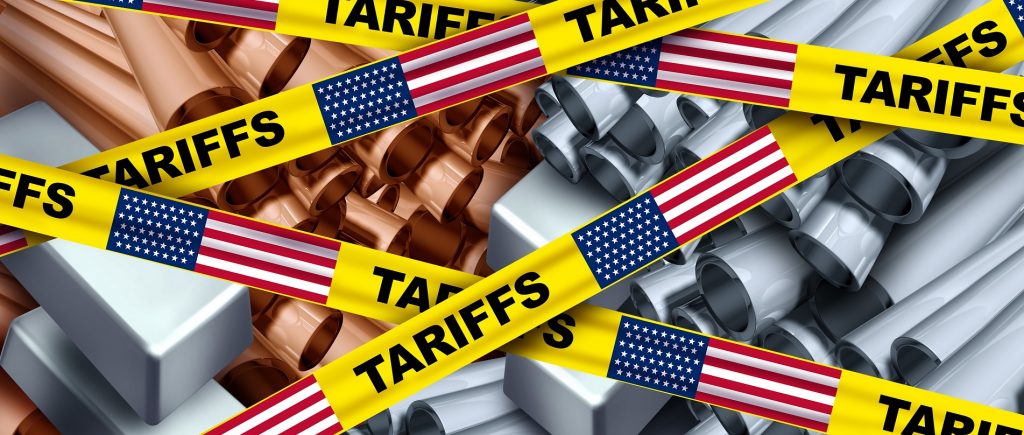
Markets Hold Their Breath Ahead of a Historic Decision: Global markets brace for a decision that could redraw trade policy, corporate profits, and executive power. Global investors are on edge as the U.S. Supreme Court prepares to potentially issue opinions this Friday, January 9, 2026, on the legality of sweeping tariffs imposed in 2025 under emergency powers. The ruling is widely viewed as a watershed moment for U.S. trade policy, with implications stretching far beyond American borders.
The tariffs in question range from 10% to 50% on imports from a broad array of trading partners, including China, Canada, Mexico, and others. They were enacted under the International Emergency Economic Powers Act (IEEPA), a statute originally designed to address extraordinary national threats—not to restructure global trade flows.
Judicial Skepticism Signals a Possible Turning Point
During oral arguments held in November 2025, justices across the ideological spectrum appeared skeptical that the emergency law authorizes such wide-ranging tariffs. Several pointed to the constitutional role of Congress in taxation and questioned whether routine trade imbalances qualify as a national emergency.
Lower courts have already ruled against the tariffs, concluding that IEEPA does not grant the president authority to impose broad, economy-wide duties. Legal observers largely expect the Supreme Court to affirm those rulings, potentially striking down one of the most aggressive trade actions in modern U.S. history.
Refund Storm: Billions Potentially at Stake
If the tariffs are invalidated, the financial fallout could be immediate and complex. Importers may seek refunds on hundreds of billions of dollars already paid to the federal government. While reimbursement would likely unfold over years through legal and administrative channels, the prospect alone is enough to move markets.
At the same time, the administration has indicated it could attempt to reimpose similar tariffs using alternative legal authorities, setting the stage for continued policy uncertainty even after the ruling.
Big Winners: Retail, Tech, and Global Supply Chains
A ruling against the tariffs would be a major relief for companies deeply embedded in global supply networks. Large retailers that depend heavily on imported goods could see sharp cost reductions, improved margins, and greater pricing flexibility. Technology and apparel firms, long burdened by higher input costs, would likely benefit from a swift rebound in profitability.
Automakers could gain from cheaper components and revived consumer demand, while logistics and shipping firms might experience a short-term surge in volumes as pent-up trade flows resume. Market estimates suggest that removing the tariffs could lift earnings for major U.S. companies by as much as 2.4% in 2026, potentially fueling rallies in consumer-facing and import-heavy stocks.
Potential Losers: Protected Industries and Fiscal Stability
Not everyone would cheer a rollback. Domestic industries that thrived behind tariff barriers—particularly in steel, metals, and certain energy segments—could face renewed competition and margin pressure.
On the macro front, the loss of tariff revenue could weigh on government finances, adding strain to budget deficits. Some market participants expect the U.S. dollar to weaken in response, while Treasury yields could edge higher. In periods of uncertainty, gold and other commodities may attract safe-haven flows.
Global Ripple Effects: Relief Across Asia and Europe
International markets are watching closely. An unfavorable ruling for the tariffs could spark rallies across Asia and Europe, easing pressure on exporters and restoring confidence in global trade channels. Reduced uncertainty may also prompt a temporary acceleration in imports, benefiting manufacturers and exporters worldwide.
Canada and other close trading partners would likely welcome a ruling that restores more predictable trade relations after months of disruption.
The Unlikely Upside: If the Tariffs Survive
While considered less probable, a ruling that upholds the tariffs would deliver a significant political and policy victory for the administration. Such an outcome would likely pressure import-dependent companies, reignite inflation concerns, and extend volatility across equity and currency markets. Domestically focused and protected sectors could gain renewed momentum under an extended tariff shield.
A Verdict With Lasting Consequences
Whether the Supreme Court strikes down the tariffs or allows them to stand, the decision is set to influence markets, trade negotiations, and the balance of power between Congress and the presidency for years to come. As Friday approaches, investors remain firmly in wait-and-see mode—bracing for sharp moves once the Court finally speaks.