Noor Trends News, Technical Analysis, Educational Tools and Recommendations

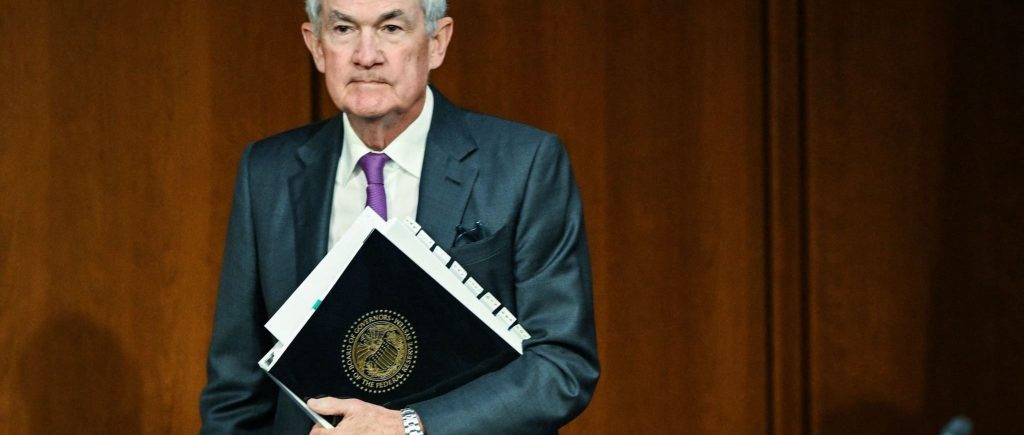
The April 28–29, 2026 FOMC meeting will likely mark Jerome Powell’s final monetary policy decision as Federal Reserve Chair. His four-year term as Chair expires on May 15, 2026. While Powell has stated he will serve as Chair pro tempore until a successor (reportedly Kevin Warsh) is confirmed by the Senate, and he remains a Fed Governor until January 2028, markets and analysts widely view the April gathering as his last full meeting in the chair role.
Current Policy Stance
Following the March 18 hold (federal funds rate at 3.50%–3.75%), the Fed faces a more complicated backdrop. Inflation remains above the 2% target, with recent data showing sticky core pressures. The surge in crude oil prices—driven by Middle East developments (Iran conflict and supply concerns)—adds upside risk to both headline and potentially core inflation.
Economic growth is described as solid, but uncertainty around the oil shock’s duration and its spillover effects looms large.
Three Scenarios Wall Street Is Discussing
Analysts highlight three possible paths for April:
Most likely: No change — CME FedWatch Tool (as of late March 2026) prices an ~88–95% probability of rates remaining unchanged. This aligns with the Fed’s data-dependent approach and preference to avoid premature moves amid uncertainty.
Rate cut — Very low probability in April; broader 2026 cut expectations have fallen sharply. Early-year forecasts of a ~70% chance for at least one cut have dropped toward 40% or lower, with some pricing near-zero cuts for the year if the oil shock persists.
Rate hike (remote chance) — Markets assign roughly 7–12% odds of a 25 bp increase. While highly unlikely for April, the discussion itself reflects heightened inflation concerns from energy prices. A hike would be historic in this context and could signal a strong hawkish tilt.
Why the Shift in Outlook?
Oil and inflation: Higher energy costs risk pushing PCE inflation further from target and could feed into broader prices via transportation and production costs.
Labor market: Stable but with softening elements; the Fed must balance inflation risks against potential employment downside.
Leadership transition: Any signal from Powell could influence how markets price the post-Powell era. A new Chair might bring a different tone on the dual mandate.
Implications for Traders and Investors
Volatility expected: The meeting (no SEP/dot plot in April) will feature Powell’s final press conference. Hawkish comments on inflation or oil could pressure equities (especially rate-sensitive growth stocks) and push Treasury yields higher. Dovish reassurance might provide relief.
Sector positioning: Energy and commodity-related sectors may benefit from elevated oil; consumer discretionary, housing, and tech could suffer if “higher-for-longer” rhetoric strengthens. Agricultural and rural economies (as noted in Southeast AgNet coverage) face indirect hits via higher input/fuel costs.
Broader 2026 path: Focus shifts to incoming data—April CPI, employment reports, and oil inventory trends. June (with SEP) could see the first real policy pivot under Powell or his successor.
Risk management: Hedge geopolitical oil risks and inflation surprises. Range-bound rates with data-driven flexibility remain the base case, but the remote hike tail risk adds asymmetry.
In summary, Powell’s potential swan song arrives against a backdrop of sticky inflation, energy shocks, and transition uncertainty. Expect a steady hold with cautious language, but monitor Powell’s tone closely—it could set the narrative for monetary policy well beyond May 15. Markets should prepare for choppiness and remain nimble as the Fed navigates dual risks to its mandate.