Noor Trends News, Technical Analysis, Educational Tools and Recommendations


Key Takeaways:
- Futures deeply in the red: S&P 500, Nasdaq 100, and Dow Jones futures slumped early Monday following the collapse of high-stakes U.S.-Iran ceasefire negotiations.
- Hormuz blockade triggers oil spike: A targeted U.S. naval blockade of Iranian ships and ports has sent Brent crude racing back above the $100-a-barrel threshold.
- Inflation fears compound market stress: A hot, energy-driven March CPI print has investors bracing for the Federal Reserve to hold interest rates higher for longer.
- Bank earnings take center stage: The Q1 earnings season kicks off this week under a cloud of macro uncertainty, with heavyweights like Goldman Sachs and JPMorgan reporting.
U.S. equity futures pointed to a sharply lower open on Monday, as a volatile cocktail of geopolitical breakdowns and stubborn inflation forced a rapid recalibration of risk across Wall Street.
The immediate catalyst for the sell-off was the total collapse of weekend ceasefire negotiations between the United States and Iran. By early morning trading, S&P 500 Futures had dropped 0.7% to 6,806.25, while the tech-heavy Nasdaq 100 Futures fell 0.8% to 25,071.75. Dow Jones Futures mirrored the broader market anxiety, shedding 0.7% to sit at 47,806.0 points.
Diplomacy Stalls, Blockade Begins
Global markets were jolted after U.S. and Iranian officials, meeting in Pakistan over the weekend, failed to secure a de-escalation agreement. The talks reportedly floundered over irreconcilable differences regarding Iran’s nuclear program and demands for the unconditional, toll-free reopening of the Strait of Hormuz.
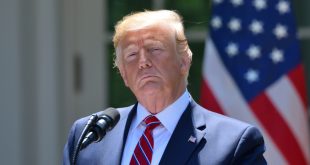
In swift retaliation to the diplomatic impasse, U.S. President Donald Trump ordered a blockade of the critical maritime chokepoint. While index futures initially plunged more than 1% on the headline, markets recovered a fraction of those losses after U.S. Central Command issued a crucial clarification: the military action, effective 10:00 ET Monday, will be a targeted blockade focusing exclusively on Iranian vessels and ports, rather than a blanket shutdown of the strait.
Despite the narrower scope, the failure of diplomacy guarantees continued disruptions in global energy logistics. Consequently, crude oil markets reacted violently, with Brent crude surging past the $100-a-barrel mark on Monday morning.
Energy Shocks Complicate the Fed’s Path
The escalating conflict in the Middle East is rapidly spilling over into domestic economic data, creating a massive headache for the Federal Reserve. Wall Street is currently digesting a hotter-than-expected March Consumer Price Index (CPI), which underscored a sharp acceleration in inflation driven almost entirely by the geopolitical energy shock.
With oil firmly above $100 and supply chains constrained, the narrative of “sticky” inflation is gaining dangerous traction. Investors are increasingly concerned that sustained energy-fueled inflation will choke off economic growth while simultaneously handcuffing the Federal Reserve, severely diminishing the likelihood of any interest rate cuts this year.
Q1 Earnings Season Kicks Off
Against this turbulent macroeconomic backdrop, the first-quarter corporate earnings season is officially underway.
Wall Street managed a mixed close on Friday before the weekend’s geopolitical developments, with the NASDAQ Composite outperforming thanks to strength in the semiconductor space. Chipmakers were buoyed by robust March revenue from industry bellwether TSMC, which is slated to release its full quarterly results later this week.
However, the immediate market focus has shifted to the financial sector, which will provide a vital pulse check on the broader economy. Goldman Sachs is scheduled to report its earnings on Monday, paving the way for a critical Tuesday lineup featuring JPMorgan Chase, Wells Fargo, and Citigroup. Investors will be hanging on every word from bank executives regarding credit health, consumer resilience, and capital market activity in an increasingly fraught global environment.