Noor Trends News, Technical Analysis, Educational Tools and Recommendations

Is the Era of Free Trade Over? Insights from U.S. Tariff Strategies
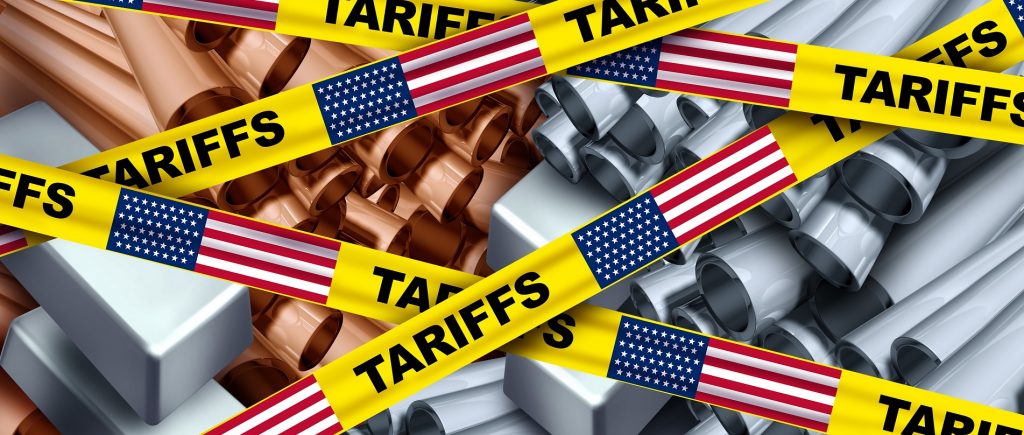
A dramatic legal decision combined with a swift policy response has once again shaken the foundation of U.S. trade policy, raising questions about whether the era of broadly liberalized global trade has truly ended. The recent “tariff reset” has sent ripples through financial markets, creating uncertainty for businesses and investors while making one thing clear: tariffs are poised to remain a structural feature of U.S. economic strategy.
The turning point came when the Supreme Court invalidated a large portion of the tariffs imposed under emergency authority. The ruling temporarily reduced the effective tariff rate on U.S. imports, offering markets a brief reprieve. Prices on imported goods eased slightly, and concerns about supply-chain disruptions diminished, providing a rare moment of optimism for importers and consumers alike.
However, this relief was short-lived. Within days, the White House invoked alternative legal authority to introduce a sweeping 15% tariff across most previously affected goods. While described as a recalibration rather than an escalation, the measure effectively restored much of the prior trade burden. In practice, the United States maintained a heavy-handed tariff framework, signaling its determination to preserve leverage in ongoing negotiations with trading partners.
The scope of these new tariffs reveals important political and economic limits. Rather than applying indiscriminately, the tariffs targeted products that had already faced reciprocal restrictions, while goods compliant with North American trade rules remained exempt. Additional carve-outs, notably for civil aircraft and related components, highlight the careful balancing act between economic protection and international obligations. These limitations illustrate that, while U.S. trade rhetoric remains aggressive, practical constraints continue to shape policy outcomes.
Taken together, these developments suggest that U.S. tariffs may have reached their practical peak. Policymakers appear intent on maintaining a baseline level of protection to support domestic industries, manage trade negotiations, and safeguard fiscal projections. A full return to the era of broadly liberalized trade seems increasingly unlikely, at least in the near term.
The implications for currency markets are significant. Persistent trade restrictions tend to support the U.S. dollar by moderating import demand and reinforcing its appeal as a safe-haven asset during periods of uncertainty. At the same time, tariffs can slow growth and complicate inflation expectations, creating a nuanced environment for monetary policy decisions. Investors now face a delicate balance between economic resilience and market risk, with trade policy acting as a central factor shaping currency performance.
Legal uncertainty adds another layer of complexity. While the court’s ruling limited unilateral executive authority, it did not eliminate the unpredictability of trade policy. The swift pivot to alternative legal avenues underscores how quickly U.S. trade strategy can adapt, keeping businesses, markets, and international partners on alert. As long as tariffs remain a flexible political tool, volatility in currencies, commodities, and equities is likely to persist.
Looking ahead, markets are expected to watch for incremental refinements rather than sweeping reversals. Some tariffs may be eased slightly, but the overarching message is unmistakable: protectionism is now a strategic feature of U.S. trade policy. For global investors, businesses, and policymakers, the lesson is clear—preparing for sustained, strategic trade restrictions has become the new normal. The era of unrestrained free trade may be over, but its legacy will continue to influence markets and economic decisions for years to come.