Noor Trends News, Technical Analysis, Educational Tools and Recommendations

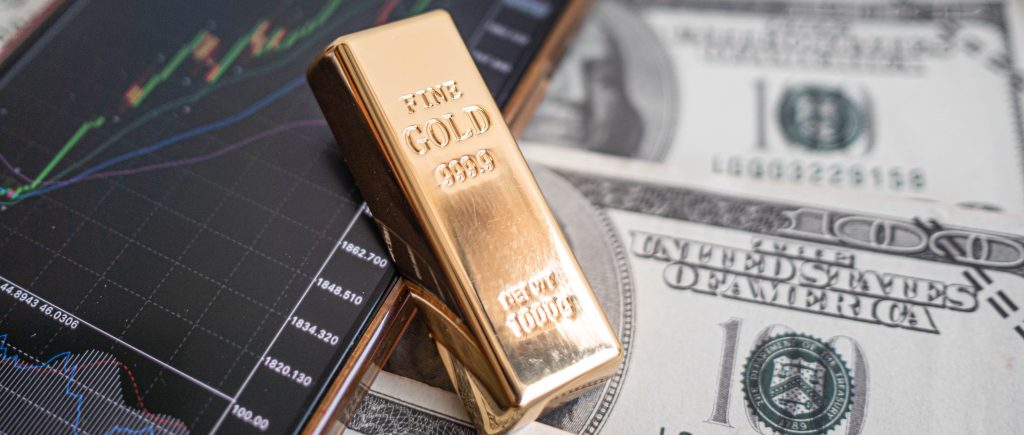
Gold experienced a notable retreat on Monday, drifting toward the $4,190 mark as a surge in U.S. Treasury yields dampened the metal’s appeal. While the year has been defined by a historic 60% rally, the immediate path is clouded by a high-stakes standoff between rising borrowing costs and anticipated shifts in central bank policy.
The Tug-of-War: Yields vs. Rate Cuts
The primary weight on spot prices is currently the rise in U.S. 10-year Treasury yields. Higher yields typically make non-interest-bearing assets like gold less attractive to investors. This pressure has effectively capped the metal’s upward momentum, forcing a dip from the daily high of $4,219 to current levels near $4,191.
Despite this local slide, institutional confidence remains high due to a widely expected Federal Reserve rate cut this Wednesday. Current market probability sits at 86% for a 25-basis-point reduction. However, traders remain on edge over the possibility of a “hawkish cut,” where officials might signal a pause or a slower pace for future cuts to combat persistent inflation, a move that could trigger a deeper temporary pullback.
Safe-Haven Logic: Geopolitics and Environmental Shifts
While fiscal policy drives the daily fluctuations, geopolitical and environmental factors provide a sturdy floor for the market:
Regional Instability: Stalled peace talks in Eastern Europe continue to sustain the geopolitical risk premium. As long as a clear diplomatic resolution remains out of reach, institutional demand for safe-haven assets is expected to stay elevated.
Seismic Impacts: A powerful 7.6 magnitude earthquake and subsequent tsunami warnings in Northeastern Japan late Monday added fresh layers of uncertainty to global markets, historically a catalyst for risk-averse investors to rotate into bullion.
De-dollarization: Central bank accumulation remains a cornerstone of the market. Several emerging economies continue to diversify their reserves away from traditional currencies and into gold at record levels.
The “battle for $4,200” is entering a decisive phase. If the central bank confirms a dovish pivot and economic data shows a cooling labor market, analysts project a rapid return to recent record highs above $4,300. Conversely, if yields continue their ascent alongside a strengthening dollar, the metal may test support levels closer to $4,100 before finding its next wave of buyers.