Noor Trends News, Technical Analysis, Educational Tools and Recommendations

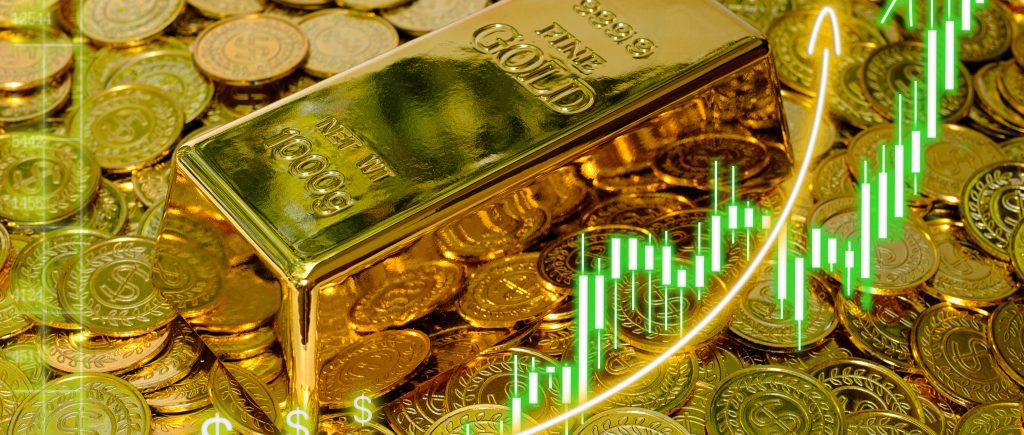
Gold surged to unprecedented territory, breaking decisively above the $5,100 per ounce mark as a wave of geopolitical tension and financial uncertainty swept through global markets. The precious metal’s rally reflects a powerful shift in investor behavior, with capital flowing rapidly toward safe-haven assets amid fears of political escalation, trade disruptions, and growing pressure on monetary authorities.
The move marks one of the strongest and most decisive advances in gold’s modern trading history. Investors are increasingly viewing gold not just as a hedge, but as a core asset for capital preservation in an environment defined by instability and policy unpredictability.
Geopolitics Rekindle Demand for Safety
Rising international tensions have been a central driver behind gold’s latest surge. Fresh trade threats involving major global economies have reignited fears of retaliatory measures, supply chain disruptions, and slower global growth. These concerns have undermined confidence in risk-sensitive assets and boosted demand for assets perceived as immune to political shocks.
Gold, long regarded as the ultimate refuge during periods of turmoil, has benefited directly from this shift. As diplomatic rhetoric hardens and trade uncertainty resurfaces, investors have increasingly sought shelter in tangible assets with a long history of preserving value.
Dollar Pressure and Currency Concerns Add Fuel
Weakness in the U.S. dollar has further amplified gold’s rally. As confidence in fiat currencies wavers, gold’s appeal as an alternative store of value has grown stronger. Currency markets have become increasingly sensitive to political intervention and policy signaling, prompting investors to look beyond traditional holdings.
Speculation around potential currency coordination between major economies has added another layer of uncertainty, reinforcing gold’s role as protection against abrupt foreign-exchange moves and competitive devaluations.
Monetary Policy in the Spotlight
Expectations surrounding monetary policy have also played a critical role in gold’s ascent. While interest rates are widely expected to remain unchanged in the near term, political pressure on central bank independence has unsettled markets. Growing debate over future rate cuts and easier financial conditions has strengthened demand for non-yielding assets such as gold.
In environments where real returns on cash and bonds are under threat, gold tends to thrive. Investors appear increasingly convinced that accommodative policies and elevated liquidity will remain part of the global financial landscape, further underpinning the metal’s appeal.
Central Banks and Long-Term Accumulation
Beyond short-term market flows, gold continues to receive strong structural support from central bank buying. Official institutions around the world have been steadily increasing their gold reserves as part of long-term diversification strategies, reducing reliance on traditional reserve currencies.
This sustained accumulation has added depth and resilience to the rally, signaling that gold’s rise is not solely driven by speculative interest, but also by strategic, long-horizon positioning.
Investor Inflows Reinforce Momentum
Investor demand has expanded well beyond institutions. Strong inflows into gold-backed investment vehicles indicate renewed enthusiasm from both retail and professional investors. This wave of participation has been particularly pronounced in parts of Asia and Europe, where concerns over currency stability and geopolitical risk have intensified.
The breadth of demand suggests that the rally is being driven by a wide base of market participants, enhancing its durability and reducing the likelihood of a sudden reversal.
Silver, Platinum, and Palladium Join the Surge
The rally has not been limited to gold alone. Silver has surged to record levels, driven by a combination of safe-haven demand, momentum buying, and tight physical supply. Industrial metals with precious characteristics, including platinum and palladium, have also climbed sharply, reflecting a broader re-pricing across the metals complex.
While high prices may eventually curb industrial demand, near-term momentum remains strong as investors seek exposure to tangible assets amid volatile conditions.
Looking Ahead: A Market Defined by Uncertainty
Gold’s decisive break above $5,100 represents more than a technical milestone. It is a clear signal of rising anxiety across the global financial system and a reassessment of risk in an increasingly fragmented world. With geopolitical tensions unresolved, trade risks resurfacing, and monetary policy under intense scrutiny, gold’s role as a cornerstone of defensive strategies appears stronger than ever.
As long as uncertainty dominates headlines and confidence remains fragile, gold is likely to stay firmly in focus—serving as both a barometer of global stress and a preferred refuge for investors navigating an unpredictable economic landscape.