 Noor Trends News, Technical Analysis, Educational Tools and Recommendations

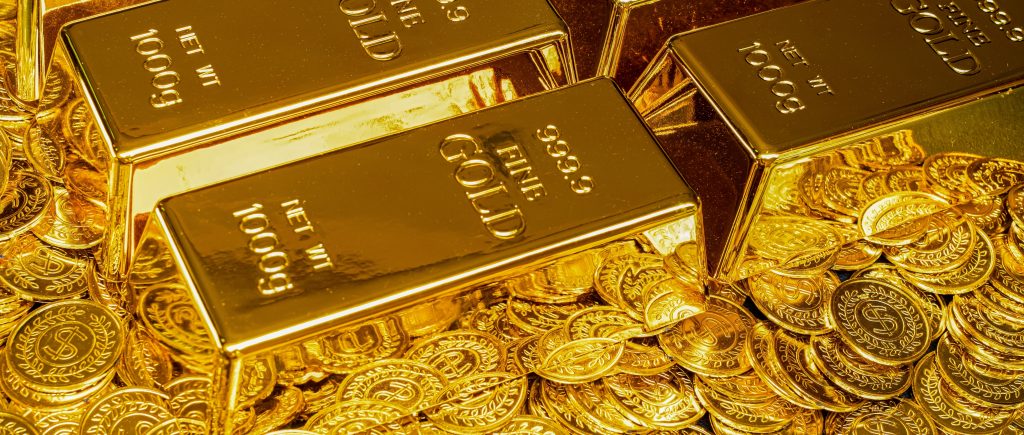
Gold prices fell below key technical levels in Asian trade on Monday, while silver posted sharper losses, as investors remained cautious amid lingering uncertainty over the U.S. interest rate outlook following mixed inflation data.
Precious metal markets continued to experience heightened volatility after a period of sharp swings over the past two weeks, with both gold and silver still trading well below their late-January highs.
Spot gold declined 1.2% to $4,982.10 an ounce, while April gold futures eased 0.9% to $5,001.76 an ounce by 00:09 ET (05:09 GMT). Silver led losses across the sector, with spot prices tumbling nearly 3% to $75.4505 an ounce. Spot platinum also weakened, slipping 1% to $2,047.25 an ounce.
Trading activity was subdued during the session, as markets in China, South Korea and the United States were closed, resulting in thinner volumes that may have amplified price moves.
The U.S. dollar held steady in Asian trade as investors assessed the implications of January’s consumer price index data released on Friday. The report showed a modest easing in headline inflation, while core CPI matched expectations, offering little clarity on the Federal Reserve’s next policy steps.
Volatile metals trading reflects Fed uncertainty
Gold and silver had managed to retain some gains from the previous week, supported by dip-buying interest, a softer dollar earlier in the period, and bouts of safe-haven demand amid elevated U.S.-Iran tensions. However, prices remained well below recent peaks, underscoring continued caution among investors.
Market uncertainty around U.S. monetary policy has been a key driver of recent volatility. Late-January losses in gold were initially sparked after U.S. President Donald Trump nominated Kevin Warsh as the next Federal Reserve Chair, set to replace Jerome Powell in May. Warsh is widely viewed as a less dovish choice, raising concerns that monetary conditions may remain relatively tight over the medium term.
Analysts at ANZ noted that investor focus is gradually shifting toward the potential inflationary effects of tariffs and broader questions surrounding future Federal Reserve credibility. “Such a backdrop will intensify investors’ appetite for real assets like gold,” the bank said, while maintaining a positive long-term outlook for the metal.
Fed minutes and PCE data in focus
Attention now turns to a series of key U.S. economic releases later this week. Minutes from the Federal Reserve’s January policy meeting are due on Wednesday and are expected to offer deeper insight into policymakers’ thinking on interest rates, particularly in light of the impending leadership transition at the central bank.
In addition, December’s personal consumption expenditures (PCE) price index — the Fed’s preferred inflation gauge — is scheduled for release later in the week and is likely to play a significant role in shaping longer-term rate expectations. Investors will also be watching upcoming U.S. trade and industrial production data for further signals on the health of the economy.