Noor Trends News, Technical Analysis, Educational Tools and Recommendations

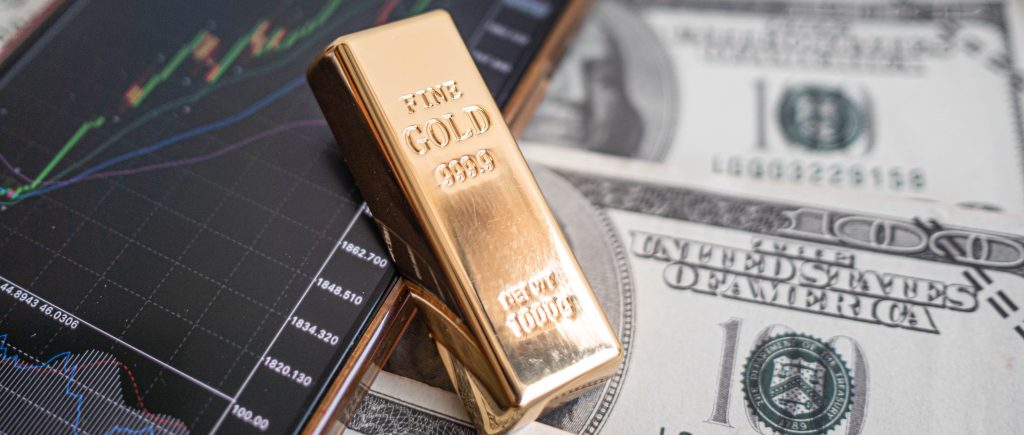
Gold prices fell below key levels in Asian trading on Wednesday, as investors turned cautious ahead of a closely watched Federal Reserve decision and rising concerns over inflation.
After briefly reclaiming the $5,000 per ounce level, bullion reversed course as ongoing tensions in the U.S.-Israel conflict with Iran heightened uncertainty around the inflation outlook.
By 01:18 ET (05:18 GMT), spot gold declined 0.4% to $4,987.09, while gold futures also dropped 0.4% to $4,990.44 per ounce.
Precious metals retreat broadly
The weakness extended across the metals complex, with spot silver falling 0.3% to $79.0345 per ounce, and platinum slipping 0.6% to $2,116.40 per ounce.
Limited safe-haven demand despite geopolitical risks
Despite escalating tensions in the Middle East, gold struggled to attract sustained safe-haven demand. The metal remained under pressure as investors focused more on the inflationary impact of the conflict rather than geopolitical risk alone.
The war showed little sign of easing, following reports that an Israeli airstrike killed senior Iranian security figure Ali Larijani earlier this week. At the same time, oil prices held above $100 per barrel, driven by concerns over disrupted supply flows.
A key source of tension remains the Strait of Hormuz, a vital shipping route through which a significant portion of global oil supply passes. Disruptions in the waterway have pushed energy prices higher, raising fears of a broader inflation shock.
Inflation concerns outweigh haven appeal
Markets are increasingly worried that elevated energy prices will translate into persistent inflation, potentially prompting central banks to adopt a more hawkish stance.
This shift has already begun to take shape, with the Reserve Bank of Australia raising interest rates earlier this week and warning of inflation risks tied to the conflict.
Higher interest rates tend to weigh on gold, as they increase the opportunity cost of holding non-yielding assets like bullion.
Fed decision in focus
Attention is now firmly on the Federal Reserve, which is set to announce its latest policy decision later on Wednesday. The central bank is widely expected to hold interest rates steady, but investors will closely watch for signals on future policy direction.
A series of major central bank meetings will follow, including decisions from the Bank of Japan, European Central Bank, Swiss National Bank, and Bank of England.
Market expectations have shifted notably, with traders now pushing back the timing of potential Fed rate cuts to at least September, according to CME FedWatch data.
Outlook
While gold remains up on the year, it has struggled to regain momentum after retreating from a record high near $5,600 per ounce in late January.
With inflation concerns rising and interest rates expected to stay higher for longer, the near-term outlook for gold remains under pressure, even as geopolitical risks persist.