Noor Trends News, Technical Analysis, Educational Tools and Recommendations

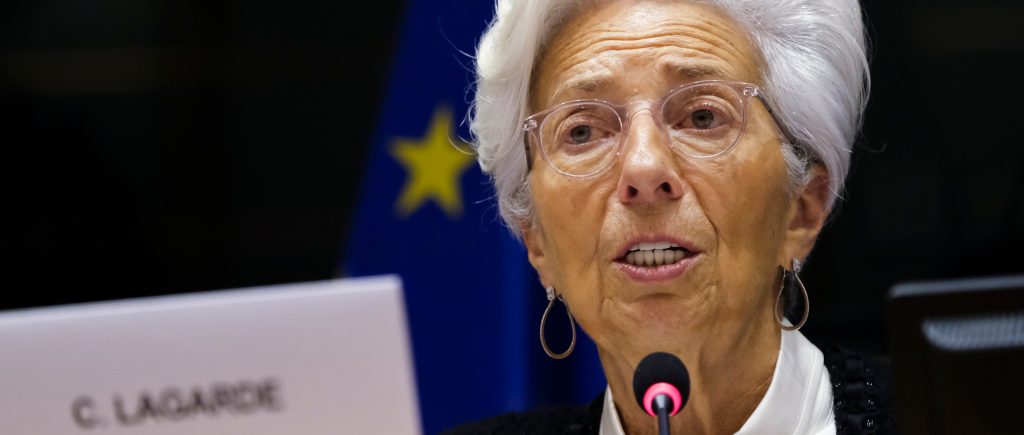
Explainer: Politics and Power — Why the Race to Succeed Lagarde Is Already Underway
The race to succeed Christine Lagarde as president of the European Central Bank is no longer a distant institutional discussion. It has become a live political question shaped as much by when a decision is made as by who eventually gets the job.
Lagarde’s single, non-renewable eight-year term, which began on November 1, 2019, is scheduled to end on October 31, 2027. Under normal circumstances, that timeline would place the selection of her successor firmly in the hands of Europe’s leaders after a new French president takes office following elections expected in the first half of 2027. But recent developments suggest that Europe’s capitals may prefer not to wait.
The trigger was the early resignation of the French central bank governor earlier this year, a move that unexpectedly shifted appointment power back to Emmanuel Macron, rather than a potential successor from the far right. That episode reinforced a critical lesson: timing can determine political control over Europe’s most sensitive economic posts.
Why Timing Matters More Than Ever
There is no fixed calendar for appointing an ECB president. Past precedents show that decisions are often reached months in advance as part of broader political bargaining at the European level. Lagarde herself was chosen roughly four months before her term began, while her predecessor, Mario Draghi, followed a similar pattern.
What makes the current situation different is the political backdrop in France. Polls consistently show strong momentum for the far-right National Rally, raising the prospect that Marine Le Pen or her protégé Jordan Bardella could wield significant influence over appointments by 2027.
From Brussels and Frankfurt, that possibility is unsettling. While Le Pen has formally dropped her earlier calls to exit the euro, senior figures around her have floated ideas that would pressure the ECB to align more closely with national fiscal priorities — a direct challenge to the bank’s independence.
A Broader Package Deal Takes Shape
Speculation is growing that European leaders may front-load appointments and settle several key ECB roles at once, rather than filling them sequentially. Beyond the presidency, at least two major Executive Board positions are due to open by 2027, including the chief economist role and another board seat expiring at the end of that year.
A bundled decision could allow governments to finalize leadership choices as early as late 2026, potentially before the French presidential campaign reaches its peak. Such a move would reduce political uncertainty, limit market volatility, and preserve institutional continuity at a time when global central banking credibility is under pressure.
Markets, Independence, and Global Context
The debate is unfolding against a sensitive global backdrop. Central bank independence has become a visible political issue, particularly in the United States, where public attacks on monetary authorities have rattled investors. European officials are keenly aware that any perception of political interference at the ECB could reverberate across bond markets, currencies, and inflation expectations.
The euro area economy still faces uneven growth, persistent fiscal strains in several member states, and the long-term challenge of financing green and defense spending. In this environment, stability at the ECB’s top matters as much symbolically as it does operationally.
The Candidates and the Stakes
Several senior central bankers are widely viewed as credible successors, representing Europe’s largest economies. While no formal process has begun, discussions inside policy circles already reflect the familiar balance between geography, political alignment, and institutional experience.
From the EU’s perspective, the risk of delay is clear: waiting too long could hand influence to a government openly skeptical of EU institutions. Acting early, however, carries its own political cost, reinforcing narratives that decisions are being taken away from voters.
A Calculated Risk
Ultimately, European leaders appear to be weighing two risks — market instability versus political backlash. For many in Brussels, the calculation increasingly favors early action. Settling the ECB succession before national politics intrude may be controversial, but it could also be the cleanest way to protect the euro zone’s most powerful institution.
Whether that gamble succeeds will shape not just who leads the ECB after 2027, but how resilient Europe’s economic governance proves in an era of rising political fragmentation.