Noor Trends News, Technical Analysis, Educational Tools and Recommendations


The U.S. dollar traded slightly lower on Wednesday as investors turned cautious ahead of quarterly earnings from artificial intelligence heavyweight Nvidia, widely seen as a key catalyst for broader market sentiment.
By 03:50 ET (08:50 GMT), the Dollar Index—which measures the greenback against a basket of six major currencies—was down 0.1% at 97.707, after rising nearly 1% over the past month.
Nvidia Earnings in Focus
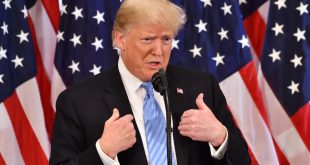
The dollar has remained rangebound after President Donald Trump’s new 10% global tariff came into effect on Tuesday, with markets alert to the possibility of the levy being raised to 15%. In his State of the Union address overnight, Trump reaffirmed his commitment to the tariff agenda despite a recent Supreme Court ruling against his authority under the International Emergency Economic Powers Act. However, analysts expect his ability to impose additional duties to be limited, as further measures would require Congressional approval.
Investor attention has now shifted decisively toward Nvidia’s earnings, due after the Wall Street close. With valuations in the technology sector stretched and spending on AI infrastructure under scrutiny, the results are seen as a critical test for risk sentiment.
“Nvidia will probably need to beat consensus and offer strong guidance to provide meaningful reassurance,” ING said in a note. “At this stage, the downside risks to global risk sentiment from a miss appear larger than the upside from a beat.”
ING added that a simultaneous fall in the dollar alongside high-beta currencies would signal growing U.S.-specific concerns linked to AI revaluations, though it sees this scenario as less likely. Instead, the bank expects the dollar to maintain its still-negative—though weaker—correlation with U.S. equities.
Euro Supported by German Growth
In Europe, the euro gained modest ground, with EUR/USD up 0.2% at 1.1792. The single currency was supported by data showing Germany’s economy grew 0.3% quarter-on-quarter in the fourth quarter of 2025, improving from flat growth in the previous quarter.
Still, gains were limited, with investors awaiting euro zone inflation data due on Friday as the key macro catalyst of the week. ING noted that persistent concerns over concentration risks in U.S. markets could continue to support the euro on dips, adding that the 1.1750–1.1760 support zone is likely to hold for now.
Sterling also edged higher, with GBP/USD up 0.2% to 1.3521, rebounding slightly from a one-month low. The move followed comments from Bank of England Governor Andrew Bailey, who said a March rate cut remains possible but cautioned that services inflation—a key metric for the BoE—has not eased as much as hoped. Bailey was part of the narrow 5–4 majority that voted to hold rates earlier this month.
Yen Weakens, Aussie Dollar Jumps
In Asia, the Japanese yen continued to soften, with USD/JPY up 0.1% to 156.00, hovering near a two-week high. Media reports suggesting that Prime Minister Sanae Takaichi expressed concern over further rate hikes during talks with Bank of Japan Governor Kazuo Ueda fueled speculation that political resistance could slow the BOJ’s tightening path.
The Chinese yuan strengthened slightly, with USD/CNY down 0.2% at 6.8672.
The Australian dollar outperformed, surging 0.7% to 0.7106 after inflation data showed headline CPI rose 3.8% year-on-year in January—unchanged from December but above expectations. The Reserve Bank of Australia’s preferred trimmed-mean inflation measure also climbed to 3.4%, its highest level in over a year, prompting markets to ramp up bets on a potential rate hike as early as May.
Overall, currency markets remained cautious, with Nvidia’s earnings and evolving trade and monetary policy dynamics set to dictate the next move.