Noor Trends News, Technical Analysis, Educational Tools and Recommendations

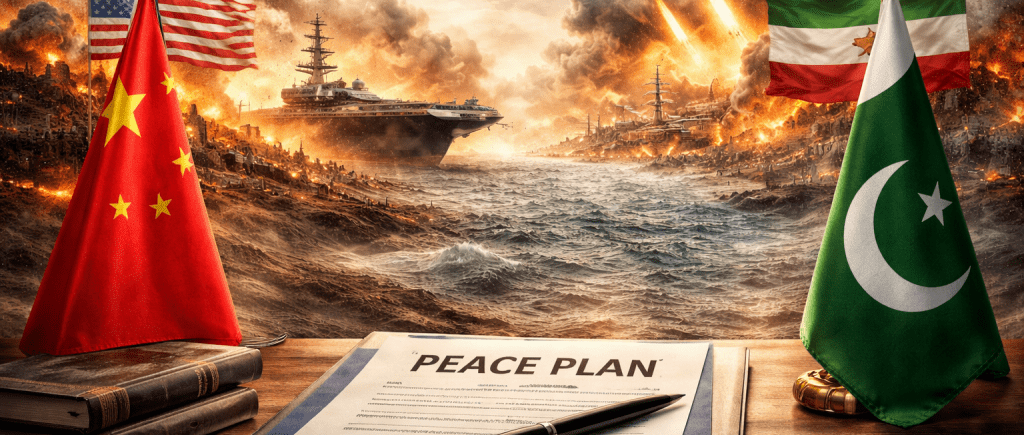
Amid intensifying conflict in the Middle East, China and Pakistan have launched a joint diplomatic initiative aimed at easing tensions and restoring stability. The move comes as the war continues to strain the region, raising global concerns over security, energy flows, and economic fallout.
The announcement followed high-level talks between both sides, reflecting a coordinated effort to push for de-escalation and position diplomacy as an alternative to prolonged confrontation.
Inside the Five-Point Strategy
The proposal lays out a clear roadmap centered on ending hostilities and preventing further escalation. At its core is an immediate ceasefire, urging all sides to halt military actions and contain the conflict. The plan also stresses the urgent need to allow humanitarian aid to reach affected populations.
Another key element is the launch of peace negotiations as soon as possible, with a strong emphasis on respecting national sovereignty and resolving disputes through dialogue rather than force.
Protecting civilians is also a major priority. The initiative calls for an end to attacks on non-military targets and critical infrastructure, including energy and water facilities, while reinforcing adherence to international humanitarian standards.
Securing global shipping routes forms another pillar of the plan. Special attention is given to the Strait of Hormuz, a vital corridor for global trade and energy supplies, with calls to ensure safe passage for commercial vessels.
The final point highlights the importance of international cooperation, encouraging a stronger role for global institutions in building a lasting and comprehensive peace framework.
Pakistan Expands Its Diplomatic Role
The initiative builds on recent regional efforts led by Pakistan, which has hosted talks involving key Middle Eastern countries in an attempt to find a path toward ending the war. Islamabad has also expressed readiness to facilitate direct dialogue between the United States and Iran, signaling its ambition to act as a mediator at a critical moment.
China Balances Influence and Stability
China’s role reflects its broader strategy of maintaining strong regional relationships while promoting stability. Despite its close ties with Iran, Beijing has focused on calling for restraint and dialogue rather than direct involvement.
At the same time, it continues to stress the importance of keeping global trade routes open, particularly as disruptions threaten supply chains and energy markets.
Hormuz Remains the Critical Flashpoint
The Strait of Hormuz stands at the center of global concern. As one of the world’s most important energy corridors, any disruption there carries immediate consequences for international markets. Recent developments have underscored how fragile the situation remains, with safe navigation becoming a top priority for global stakeholders.
A High-Stakes Test for Global Cooperation
This five-point initiative represents more than a diplomatic proposal—it is a test of whether major powers and regional players can align to prevent further escalation.
Its outcome will depend on the willingness of all sides to engage in meaningful dialogue and move beyond military solutions toward a more stable and lasting peace.