Noor Trends News, Technical Analysis, Educational Tools and Recommendations

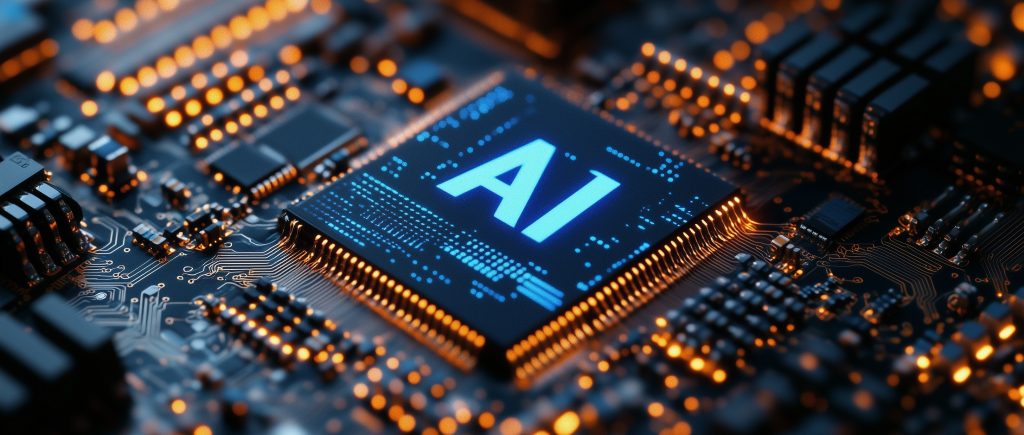
As artificial intelligence continues to dominate corporate investment plans and equity market performance, a growing debate has emerged on Wall Street: is the AI boom the early stage of a transformative technological shift, or are markets drifting toward an unsustainable bubble? The question has gained urgency heading into 2026, as valuations of AI-linked companies remain elevated and investor expectations continue to rise.
Why the Bubble Debate Has Intensified
AI spending has been one of the main drivers of equity gains over the past year, particularly in large-cap technology stocks. Companies tied to semiconductors, cloud infrastructure, and AI software have attracted massive capital inflows, pushing market concentration to historically high levels.
Several strategists point to the structure of the U.S. stock market as a key risk. The largest 20 companies in the S&P 500 now account for roughly half of the index’s total market capitalization, with many trading at forward price-to-earnings multiples well above long-term averages. Critics argue that this concentration leaves markets vulnerable if growth expectations falter.
Others note that this valuation profile does not resemble a classic runaway bubble yet. Forward earnings multiples, while elevated, have remained relatively stable over the past year rather than accelerating sharply, a pattern that differentiates the current environment from the dot-com era.
The Case Against an Immediate Bubble
Supporters of the AI investment wave argue that today’s leading AI companies are fundamentally different from speculative tech firms of past bubbles. Many have strong balance sheets, large cash reserves, and established revenue streams.
Major investment banks and asset managers have cautioned against labeling the AI surge a bubble prematurely. Their view is that while pockets of excess may exist, widespread speculative behavior has not yet taken hold. Ongoing skepticism among investors—rather than blind optimism—is often cited as a stabilizing force.
In this framework, AI is viewed as a long-term productivity driver, with returns expected to materialize gradually as applications scale across industries such as manufacturing, logistics, healthcare, and consumer services.
The Risks That Keep Investors Cautious
Despite these arguments, concerns persist. One of the biggest uncertainties is whether AI investment will generate sufficient returns to justify the scale of capital spending. Markets have so far rewarded infrastructure providers—particularly chipmakers—on the assumption that enterprise adoption will translate into sustained earnings growth.
Another risk lies in expectations running ahead of real-world deployment. While AI capabilities are advancing rapidly, many applications remain in early development or pilot phases. If monetization proves slower or more limited than anticipated, valuations could come under pressure.
There is also concern that enthusiasm around AI has spread beyond technology into unrelated sectors, where companies have benefited from valuation re-ratings simply by associating themselves with AI initiatives.
A Broader Market Issue, Not Just AI
Some analysts argue that the bubble discussion should not focus solely on AI. Elevated valuations are also evident in parts of retail, consumer staples, and defensive stocks, suggesting that excess optimism may be a broader market phenomenon driven by liquidity, low rates, and passive investment flows.
From this perspective, AI is a visible catalyst rather than the sole source of risk.
What Would Signal a True Bubble?
Historically, bubbles become clear only after they burst. Warning signs would include rapidly expanding valuations disconnected from earnings, widespread speculative trading, and a collapse in confidence following missed growth targets.
For now, the prevailing view among many strategists is that the market is navigating a high-risk but not yet irrational phase. AI remains in a heavy investment cycle, and the durability of the current rally will depend on whether promised productivity gains and revenue growth ultimately materialize.
As 2026 approaches, the AI bubble debate remains unresolved. Optimists see a foundational technology reshaping the global economy, while skeptics warn that expectations may be running ahead of reality. Until clearer evidence emerges from earnings, adoption rates, and return on investment, markets are likely to continue oscillating between enthusiasm and caution—without a definitive answer to whether AI is a boom, a bubble, or something in between.