Noor Trends News, Technical Analysis, Educational Tools and Recommendations

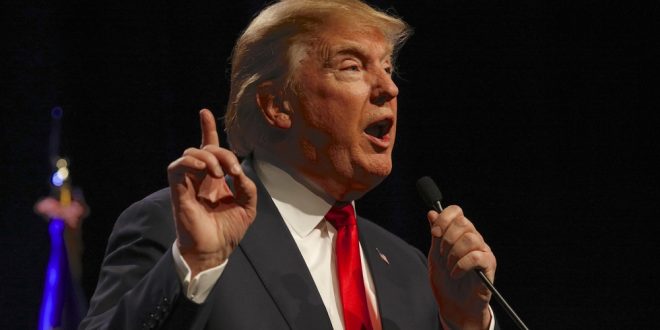
On February 20, 2026, the U.S. Supreme Court delivered a landmark 6–3 ruling that struck down President Donald Trump’s use of the International Emergency Economic Powers Act (IEEPA) to impose sweeping tariffs. Chief Justice John Roberts wrote the majority opinion, stating that the law does not authorize the president to levy import duties. The decision immediately halted the collection of tariffs that had generated over $175 billion and opened the door for importers to file refund claims through the U.S. Court of International Trade, a process expected to be complex and lengthy.
Trump’s Immediate Response
The administration moved swiftly to maintain trade leverage:
On February 21, Trump issued an executive order ending IEEPA-based tariffs and simultaneously announced a temporary global tariff of 10% on all imports, later raised to 15%, under Section 122 of the Trade Act of 1974.
These duties took effect on February 24, 2026, and are set to last 150 days, unless Congress acts to extend them. Critical imports, including energy and certain metals, were exempted to limit disruption.
Customs authorities confirmed that all previously collected IEEPA tariffs would cease immediately, while the new tariffs would apply separately.
Building a Tariff Mosaic: A Multi-Layered Legal Framework
Officials described the new approach as a mosaic of legal authorities intended to replicate the old tariff framework while addressing the Supreme Court ruling:
Section 301 (Trade Act 1974): Enables investigations into unfair trade practices, including subsidies, intellectual property concerns, and digital taxes, potentially leading to targeted tariffs lasting up to four years.
Section 232 (Trade Expansion Act 1962): Allows “national security” tariffs on sectors like batteries, chemicals, telecom equipment, and cast iron.
Existing Duties: Sector-specific tariffs on steel, aluminum, and goods from China remain in place.
Treasury officials indicated this strategy would maintain tariff revenue levels close to those generated under the previous system.
Refund Battles Ahead
The fate of the $175 billion already collected is uncertain. Importers are required to submit claims to the Court of International Trade, a process expected to take 12–18 months at a minimum. President Trump has warned that he intends to contest refund claims vigorously, potentially resulting in prolonged legal battles over several years.
Winners and Losers
Winners
U.S. Steel and Heavy Industry: Protected by targeted tariffs, reducing exposure to foreign competition.
Bond Investors: Trade uncertainty has increased demand for U.S. Treasuries, raising bond prices.
Agriculture (Short-Term): Farm exports have largely avoided the harshest measures, maintaining access to key markets.
Losers
European Automakers: New tariffs on cars and parts, particularly from Germany and Italy, increase costs and risk.
Tech Importers: Electronics and semiconductor tariffs raise costs for firms dependent on Asian supply chains.
Consumers: Higher import prices may accelerate inflation and put pressure on household budgets.
Market Impact
Dollar: Stabilized near 98 on the U.S. Dollar Index, supported by Federal Reserve guidance.
Gold: Retraced to around $5,147/oz, down 1.5% as investors sought safe assets.
Silver: Fell to about $86.85/oz, reflecting volatility but supported by industrial demand.
Equities: U.S. stocks rebounded modestly, with the S&P 500 up ~0.8%, bolstered by optimism about AI-driven productivity amid tariff uncertainty.
Impact on China and India
China: The Supreme Court ruling reduced the legal basis for the harshest IEEPA tariffs, while Section 122 tariffs have partially replaced them. This provides Beijing some room to negotiate in ongoing trade discussions, though targeted tariffs under other statutes remain in effect.
India: The reset of U.S. tariffs offers relative relief compared to previous higher rates. Certain key sectors, such as electronics, pharmaceuticals, and selected commodities, face moderated duties, allowing Indian exports to remain competitive in U.S. markets.
The Bigger Picture
Despite the Supreme Court’s rebuke, the Trump administration maintains that its trade policy is intact. By shifting from a single emergency authority to a layered legal strategy, combining temporary global tariffs with targeted investigations and existing sectoral duties, the administration seeks to retain leverage in trade negotiations.
International partners, especially in Europe and Asia, remain cautious, while U.S. consumers and businesses brace for higher costs and legal complexity. The coming months will reveal whether this mosaic approach can endure legal challenges and economic pressures or whether it risks reigniting trade conflicts that could reshape global commerce.