Noor Trends News, Technical Analysis, Educational Tools and Recommendations

A Sudden Escalation Reignites Global Market Anxiety
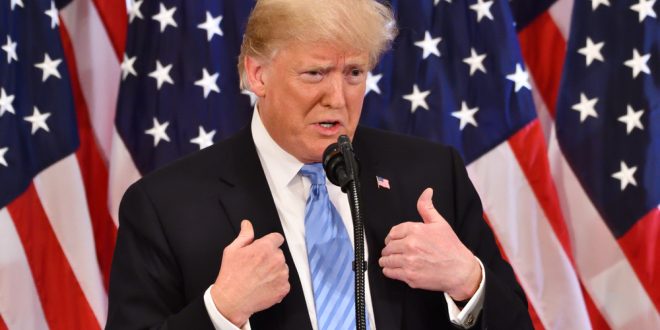
Global financial markets were shaken after renewed geopolitical tensions escalated between the United States and Iran, triggering a swift shift in risk sentiment across asset classes. The latest catalyst came after U.S. President Donald Trump issued a stark warning urging Iran to reach a deal, accompanied by a video showing the collapse of a major bridge in Iran. The message was widely interpreted as an escalation of pressure on Tehran, adding fresh uncertainty to an already fragile global risk environment.
In parallel remarks, the U.S. President suggested that ongoing operations could be concluded within weeks, while warning of potential strikes on energy infrastructure, including power facilities and possibly oil-related assets if no agreement is reached.
Markets React: Risk-Off Mood Takes Control
Financial markets reacted immediately to the heightened geopolitical rhetoric. Investor appetite for risk deteriorated sharply, with equities coming under pressure as traders moved toward safer assets.
The shift in sentiment triggered a classic “risk-off” reaction: capital flowed out of equities and higher-risk assets, while demand increased for traditional safe havens such as the U.S. dollar and selected government bonds.
Precious metals initially experienced volatility, while currency markets saw renewed strength in the dollar as traders priced in heightened uncertainty and potential disruptions in global energy supply chains.
Oil and Energy at the Center of Attention
Energy markets remain particularly sensitive to developments in the Middle East. Any perceived threat to supply routes or production infrastructure in the region tends to amplify volatility in crude oil prices.
With rhetoric intensifying around potential strikes on energy-related targets, traders are increasingly factoring in the risk of supply disruptions. This keeps crude oil supported at elevated levels, even amid broader macroeconomic uncertainty.
The Strait of Hormuz, one of the world’s most critical oil transit chokepoints, remains a key focal point for market participants assessing tail-risk scenarios.
Gold and Safe-Haven Flows Return
In periods of geopolitical stress, gold typically benefits from renewed demand as investors seek protection from uncertainty. Recent price action reflects this dynamic, with bullion stabilizing after initial volatility and regaining interest as a hedge against escalating conflict risks.
At the same time, U.S. Treasury yields and the dollar continue to play a central role in shaping gold’s direction, creating a complex interaction between safe-haven flows and interest rate expectations.
Currencies: Dollar Strength Reasserts Itself
Foreign exchange markets have also responded to the escalation. The U.S. dollar strengthened as investors moved toward liquidity and safety, reversing part of its recent weakness.
Risk-sensitive currencies came under pressure, reflecting broader concerns about global growth stability and potential spillover effects from geopolitical instability. Commodity-linked currencies, in particular, remain vulnerable to shifts in energy prices and risk appetite.
Risk Sentiment Turns Fragile Again
The current market environment highlights how quickly sentiment can shift from optimism to caution. In “risk-on” conditions, investors typically favor equities and higher-yielding assets. However, in the current “risk-off” phase, capital rotates toward defensive positioning, prioritizing capital preservation over return maximization.
This rapid swing underscores how geopolitical developments continue to dominate macroeconomic fundamentals in shaping short-term price action across global markets.
Outlook: Volatility Likely to Remain Elevated
Looking ahead, markets are expected to remain highly reactive to further political developments. Any additional escalation or diplomatic breakthrough could significantly alter pricing across equities, commodities, and currencies.
For now, uncertainty remains the dominant theme. Investors are likely to maintain defensive positioning until clearer signals emerge regarding the trajectory of U.S.–Iran relations and potential implications for global energy stability. In such an environment, volatility is not just a possibility—it is becoming the baseline condition of global markets.