Noor Trends News, Technical Analysis, Educational Tools and Recommendations

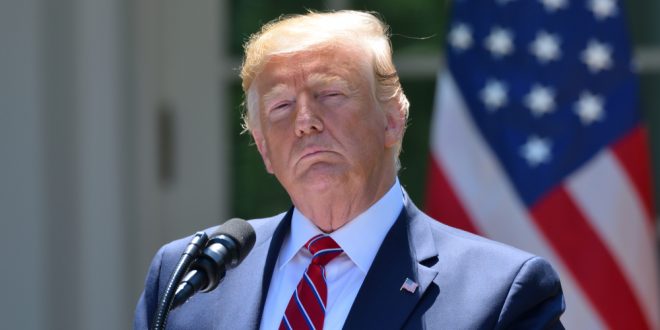
U.S. President Donald Trump warned on Wednesday that Washington will intensify military operations against Iran over the next two to three weeks, signaling a renewed escalation in the conflict and triggering immediate volatility across global markets.
Speaking from the White House, Trump said the United States would “hit them extremely hard,” emphasizing the need to prevent Tehran from developing nuclear capabilities, which he described as a major threat to U.S. security.
Escalation Before Potential Withdrawal
Trump indicated that while the U.S. remains engaged in discussions with Iran, military pressure will increase in the near term. He reiterated threats to target Iran’s electricity infrastructure if Tehran does not agree to a deal, suggesting that strikes could be widespread and coordinated.
The remarks mark a shift from earlier signals of a potential U.S. withdrawal within a similar timeframe, implying that any drawdown in military activity may first be preceded by intensified operations aimed at achieving strategic objectives.
Trump also claimed that U.S. forces had significantly weakened Iran’s naval and missile capabilities and suggested that regime change had been achieved, although no independent confirmation was provided.
Diplomatic Signals Remain Unclear
Despite references to ongoing discussions, Trump did not clarify whether a ceasefire agreement is close. Iran, for its part, has largely denied engaging in direct negotiations with Washington and rejected claims that it had sought a truce.
The lack of alignment between U.S. and Iranian narratives continues to cloud the outlook for any diplomatic resolution.
Hormuz Strategy Adds to Uncertainty
Trump reiterated that the United States will not take responsibility for reopening the Strait of Hormuz, which has been effectively blocked since the conflict escalated. Instead, he called on countries reliant on the route to secure access themselves, suggesting they either procure energy from the U.S. or take independent action to reopen the passage.
The Strait of Hormuz handles roughly 20% of global oil supply, and its disruption has been a key driver of rising energy prices and inflation concerns worldwide.
Conflict Enters Second Month with No Clear Resolution
The conflict has now entered its second month, with continued military exchanges across the region. Iran has reportedly launched attacks on Israel and Gulf countries, while Israeli forces have conducted strikes inside Iranian territory.
The ongoing hostilities, combined with the threat of further escalation, have heightened fears of a broader regional conflict.
Market Reaction
Financial markets reacted swiftly to Trump’s remarks. U.S. stock index futures reversed earlier gains, falling by as much as 1%, reflecting a shift toward risk aversion.
At the same time, oil prices surged, with Brent crude rising more than 5%, as traders priced in the increased likelihood of prolonged supply disruptions.
Outlook
The latest developments underscore the fragile balance between escalation and de-escalation in the Iran conflict. While diplomatic channels remain open in principle, the immediate outlook is dominated by rising military tensions and uncertainty over energy supply routes.
Markets are likely to remain highly sensitive to geopolitical developments, with oil prices, inflation expectations, and global risk sentiment continuing to move in tandem with headlines from the region.