Noor Trends News, Technical Analysis, Educational Tools and Recommendations

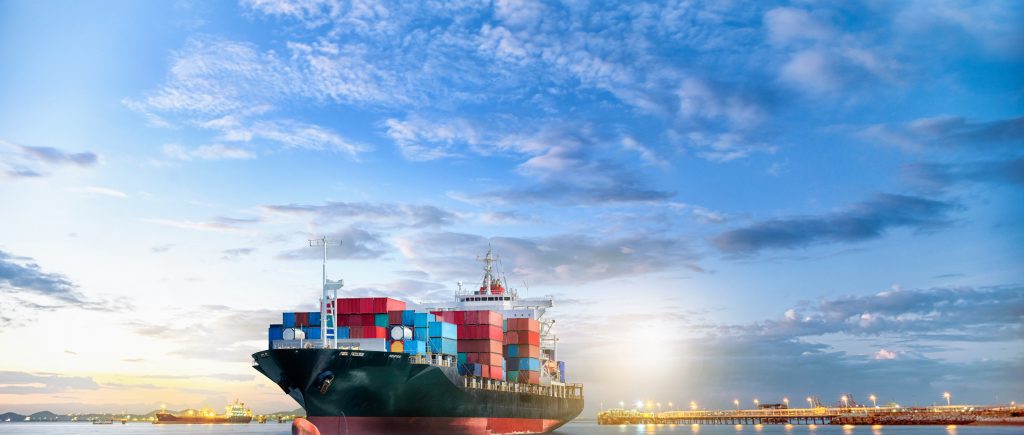
The Middle East has now been at war for nearly four weeks, and the economic shockwaves are being felt far beyond the battlefield. At the center of it all is a narrow strip of water — just 21 miles wide at its tightest point — that carries roughly one-fifth of the world’s daily oil supply and more than a third of global fertilizer trade. As one senior Gulf official put it, much of the oxygen of the global economy runs through a single throat. That throat is now dangerously constricted, and the nations that depend on it most are being forced to prove just how resilient they really are.
The Scale of the Shock
The crisis erupted when coordinated military strikes triggered an effective halt in shipping traffic through the Strait of Hormuz almost overnight. Tanker traffic collapsed, with over 150 ships anchoring outside the strait to avoid the risks of transiting it. The consequences were swift and sweeping. Oil and gas exports were stranded, crude prices surged past $120 per barrel, and the collective output of the Gulf’s major producers dropped by millions of barrels per day — marking one of the largest supply disruptions in the recorded history of global energy markets. And it wasn’t just oil. The strait handles enormous volumes of petrochemicals, industrial metals, and a substantial share of the world’s fertilizer trade, sending shockwaves outward from factories to farms to families around the globe.
A Paradox at the Heart of the Gulf
For the Gulf economies, the crisis has produced a striking contradiction. Higher oil prices would ordinarily be a windfall for governments whose budgets are built on energy revenues. But when you can’t actually move the oil, the price surge means very little. The very disruption driving those prices was simultaneously strangling export capacity, leaving governments watching record prices on screens while their tankers sat idle.
The economic pain is running through multiple channels at once — energy revenues, investor confidence, food security, and logistics costs are all being squeezed in parallel. Perhaps the most overlooked dimension of the crisis is food. The Gulf states import the vast majority of their food through the same shipping lanes now under threat, and disruptions have forced governments into emergency procurement operations, flying in supplies and rerouting cargo ships through longer, more expensive alternative routes. It is a vulnerability that rarely makes headlines but has quietly become one of the most pressing domestic concerns.
The Trillion-Dollar Firewall
Despite the severity of the shock, the Gulf entered this crisis with an extraordinary financial cushion built during years of high oil prices and careful fiscal management. Collectively, sovereign wealth funds and foreign exchange reserves across the bloc exceed $6.5 trillion — a war chest that now serves as the region’s primary line of defence against economic destabilisation. These reserves give governments the breathing room to maintain public spending, protect their currencies, and absorb external shocks without triggering the kind of austerity measures that would ripple painfully through their populations.
That cushion is real and substantial. But it is not infinite, and financial analysts are increasingly clear that its effectiveness depends heavily on how long the disruption lasts. A short, sharp shock is very manageable. A prolonged closure of the strait is a different problem altogether.
Winners and Losers Within the Gulf
One of the defining features of this crisis is that the Gulf states are not experiencing it equally. Geography and infrastructure have emerged as the decisive factors separating the more insulated economies from the more exposed ones. Some Gulf nations benefit from pipeline networks and coastal positions that allow a portion of their energy exports to continue through routes that bypass the strait entirely.
These alternatives are limited — they cannot replace full shipping volumes — but they exist and they are operational, providing meaningful relief. Others are far more dependent on the strait and have no meaningful workaround. Their export capacity is almost entirely at the mercy of whether the waterway remains open, leaving them disproportionately exposed to every new escalation. The divergence within what is often treated as a unified economic bloc has rarely been more visible or more consequential.
Infrastructure Built for Exactly This Moment
What has surprised many observers is how much quiet preparation had gone into readying the Gulf for a crisis of this kind. Decades of investment in logistics infrastructure, diversified trade corridors, and digital trade systems were built with exactly this kind of shock in mind. Some Gulf states had also spent years deliberately broadening their economic partnerships across Asia, Africa, and Europe, while systematically growing non-oil sectors including tourism, finance, and manufacturing. That long-term diversification strategy is now paying real dividends, cushioning broader economic activity even as energy exports remain disrupted.
Politically, Gulf governments have also shown notable restraint, making clear that their territory and airspace will not become instruments of further escalation — a deliberate posture aimed at protecting civilian life and keeping commercial activity as normal as circumstances allow.