Noor Trends News, Technical Analysis, Educational Tools and Recommendations

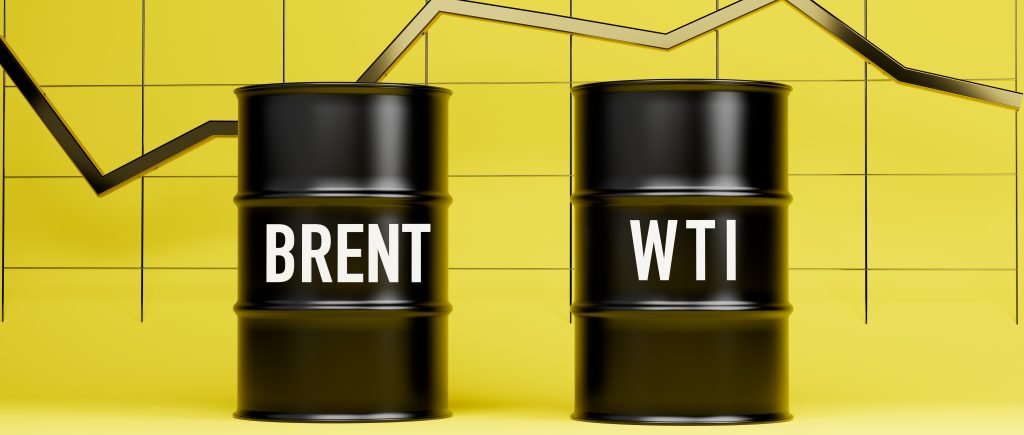
Brent and WTI crude prices extended their declines today, reinforcing the broader narrative of a market struggling under the weight of persistent oversupply and fading demand momentum. Brent slipped to around $61.16 per barrel, while WTI eased toward $57.48, both reflecting a cautious trading mood as investors assess the global energy outlook heading into 2026.
The retreat in prices comes at a time when supply growth remains robust, particularly from the United States, where production continues to hover near record highs. This steady output—combined with softening demand in key consuming regions—has kept downside pressure on crude benchmarks. Traders are also navigating concerns about a potential surplus stretching across coming quarters, a theme that has already shaped market expectations and weighed heavily on sentiment.
Despite the drop, the market is not without its pockets of support. Strategic stockpiling by major importers and occasional disruptions offer temporary lifts, though they have yet to shift the broader trajectory. The dominant tone remains driven by fundamentals that increasingly resemble past periods of market imbalance, with abundant supply overshadowing intermittent bullish news.
With Brent and WTI both trading near multi-month lows, market participants are closely watching how global economic developments, refining demand, and producer strategies evolve. For now, the slide in prices underscores a market grappling with more crude than it needs—and uncertainty about how long that imbalance will last.